
Midterm Elections: How Americans Can Change Their Government Every Two Years
Understanding Congress, presidential power, American history, and the 2026 election • Draft for editorial revision
Central question: How can Americans change the direction of their government without changing their president?
A. The Big Question — Why Are Americans Voting Again?
In November 2024, Americans voted for president. Donald Trump won and began a new four-year term in January 2025. The next presidential election is in 2028. So why will Americans vote again on November 3, 2026?
The answer is that Americans choose more than a president. They also choose members of Congress, the branch of government that makes federal laws. The 2026 election can change who controls Congress even though Trump will remain president. That can change what the government can accomplish.
B. Why This Matters
Think about two people who agree on a plan. They can usually move ahead faster than two people who disagree. Something similar happens in Washington. A president often needs Congress to approve new laws and spending. If Congress supports the president, some plans may be easier to pass. If Congress opposes the president, those plans may face more obstacles.
Midterms affect taxes, federal budgets, programs, oversight, and the balance of power. Their importance is not limited to people who vote. Government decisions also affect children, workers, immigrants, businesses, and families.
C. The Basics: How the American Government Works
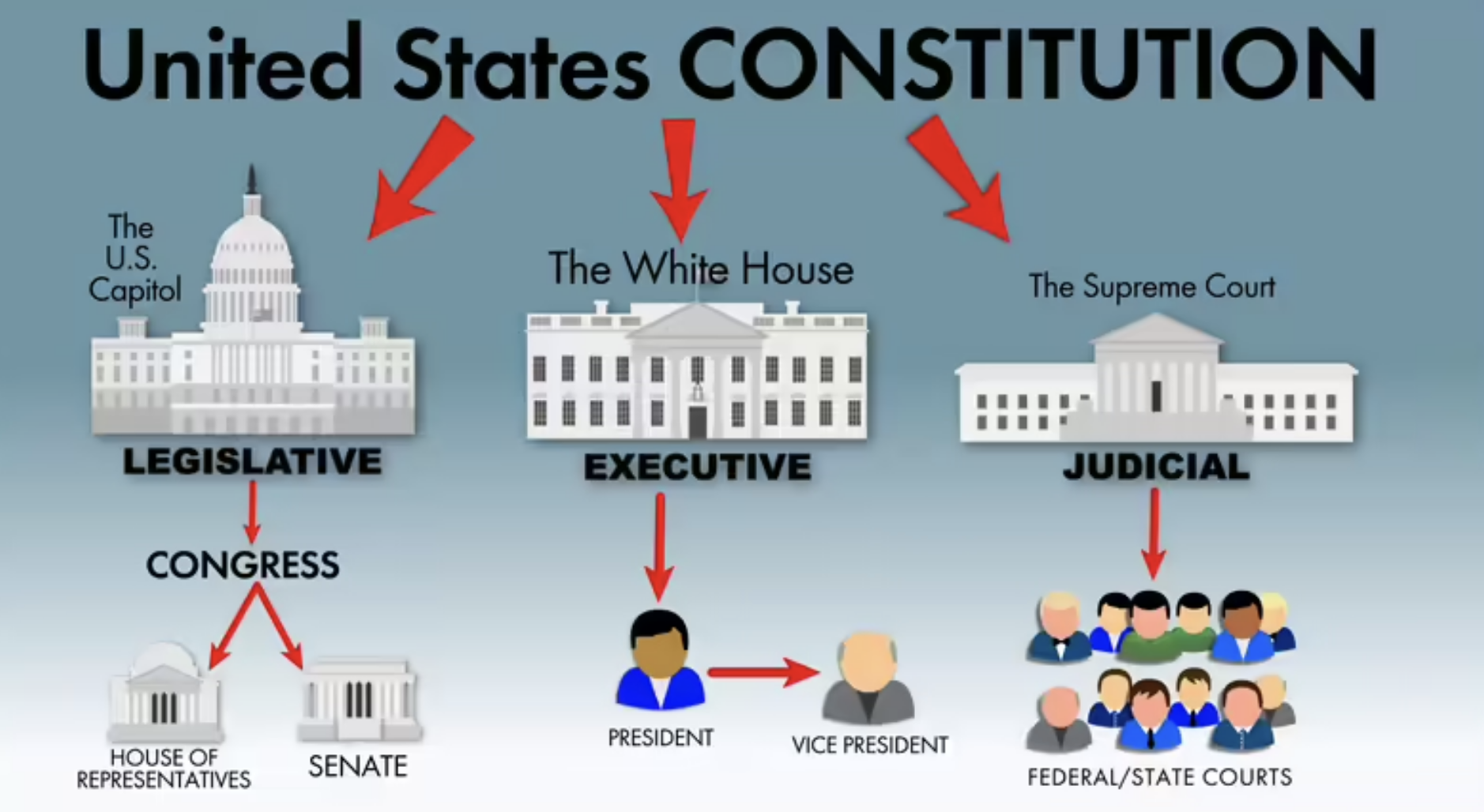
The federal government has three branches. Congress is the legislative branch. It makes federal laws and decides much of the federal budget. The president leads the executive branch, which carries out federal laws. Federal courts interpret laws and decide cases. Each branch has different powers. This arrangement is called separation of powers.
Congress has two parts. The House of Representatives has 435 voting members, with seats divided among states largely according to population. All House seats are up for election every two years. The Senate has 100 members, two from each state. Senators serve six years; about one-third of Senate seats are up for election every two years.
A midterm election is held halfway through a president’s four-year term. It does not choose a new president. It chooses members of Congress and, in many states, governors, state lawmakers, and other officials. A political party controls a chamber when it has enough members to organize and lead that chamber.
The House and Senate must generally agree on the same proposed federal law before sending it to the president. The president may sign it or veto it. Congress can override a veto with a two-thirds vote in each chamber.
D. History — Why Elections Happen Every Two Years
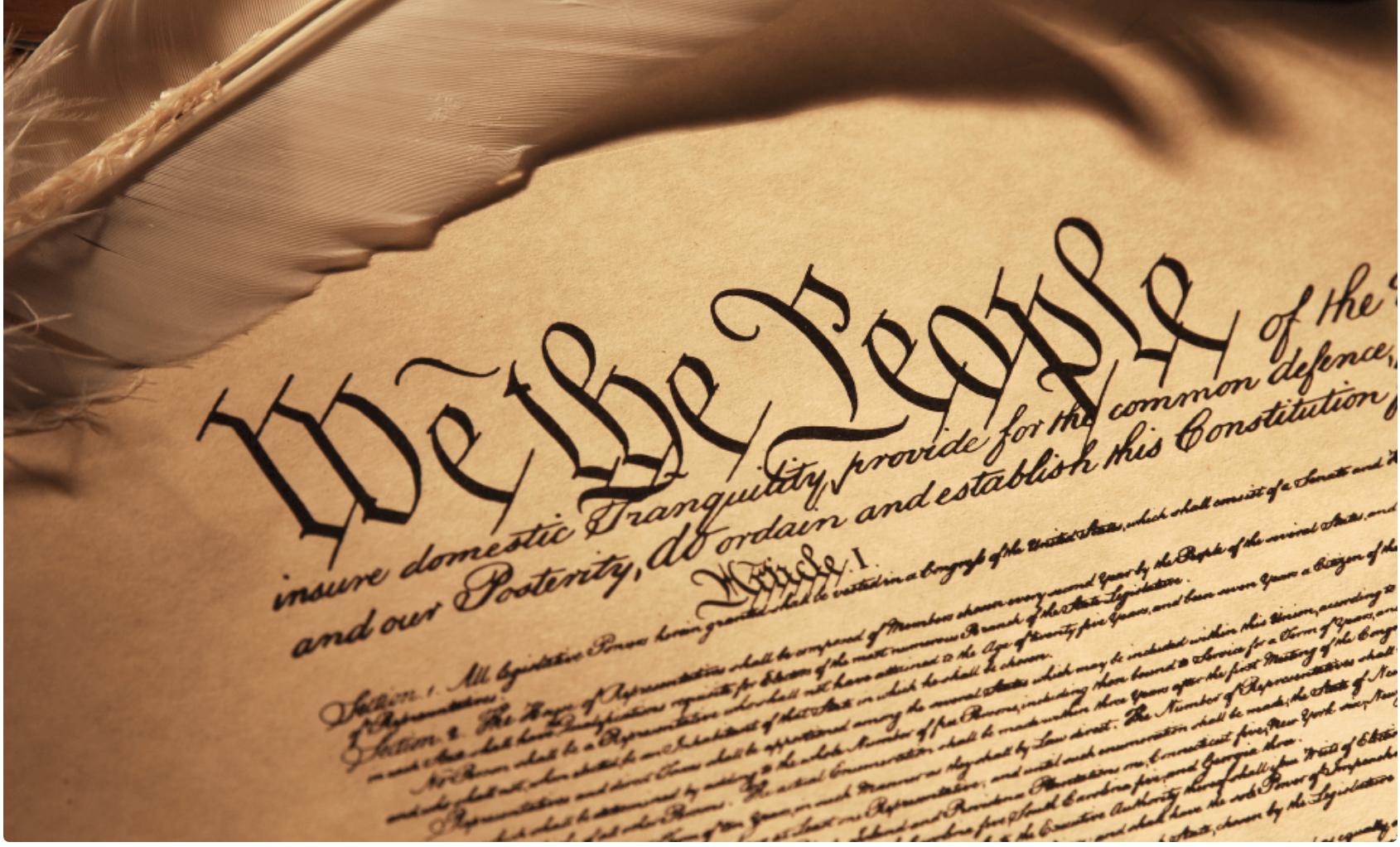
The Constitution was written in 1787. The first elections under the new Constitution took place in 1788 and 1789. The new federal government began operating in 1789. Its designers wanted a government strong enough to act, but one that could not easily concentrate all power in one person.
The House was designed to face voters often: every two years. Senators were given longer, staggered six-year terms. A president received a four-year term. Those different election schedules still help shape American politics.
The basic idea is accountability. Representatives must regularly ask the public to give them another term. Voters can support a president in one election and then support a different party in Congress two years later.
E. Real Examples — What History Teaches
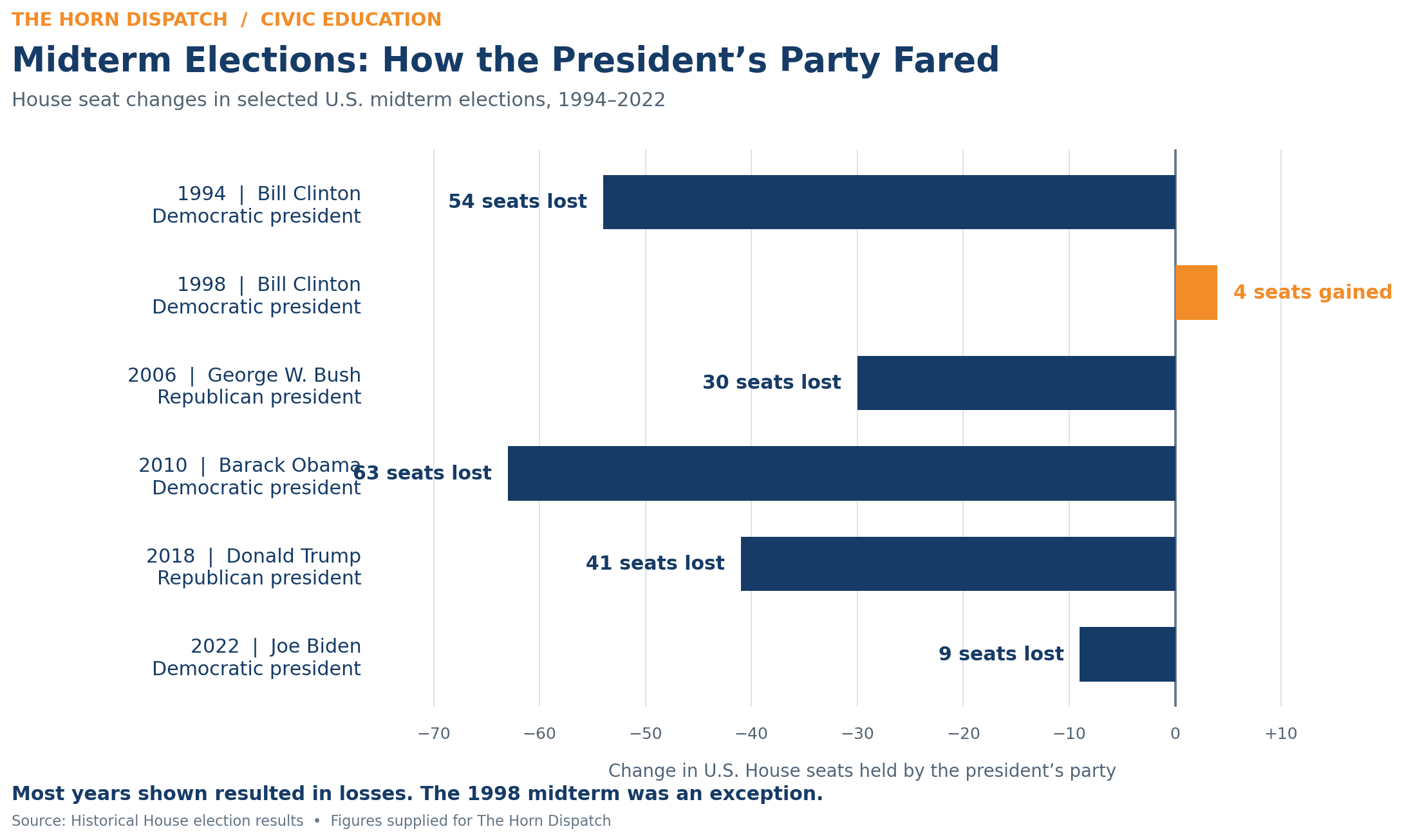
Midterm elections often go badly for the president’s party. That is a historical pattern, not a law. Political scientists point to presidential approval, turnout, public dissatisfaction, and the number of seats a party must defend.
In 1994, President Bill Clinton’s Democratic Party lost 54 House seats. In 1998, the party gained four seats, an important exception to the pattern. In 2006, President George W. Bush’s Republican Party lost 30 House seats.
Barack Obama won the presidency in 2008 with great public attention and enthusiasm. But in the 2010 midterms, Democrats lost 63 House seats and control of the chamber. His presidency continued, but working with a Republican-controlled House became much harder.
Donald Trump won the presidency in 2016. In the 2018 midterms, Republicans lost 41 House seats. Democrats took control of the House. The Democratic House could investigate the administration and block legislation it opposed. In 2022, President Joe Biden’s party lost nine House seats—fewer than many expected, but enough for Republicans to win the House.
The economy is one important factor. During Bill Clinton’s 1992 presidential campaign, the phrase “It’s the economy, stupid” became famous. Families often judge leaders by jobs, wages, rent, food, and other costs. But a midterm result also depends on candidates, participation, local issues, and events that cannot be predicted in advance.
F. Understanding the 2026 Elections
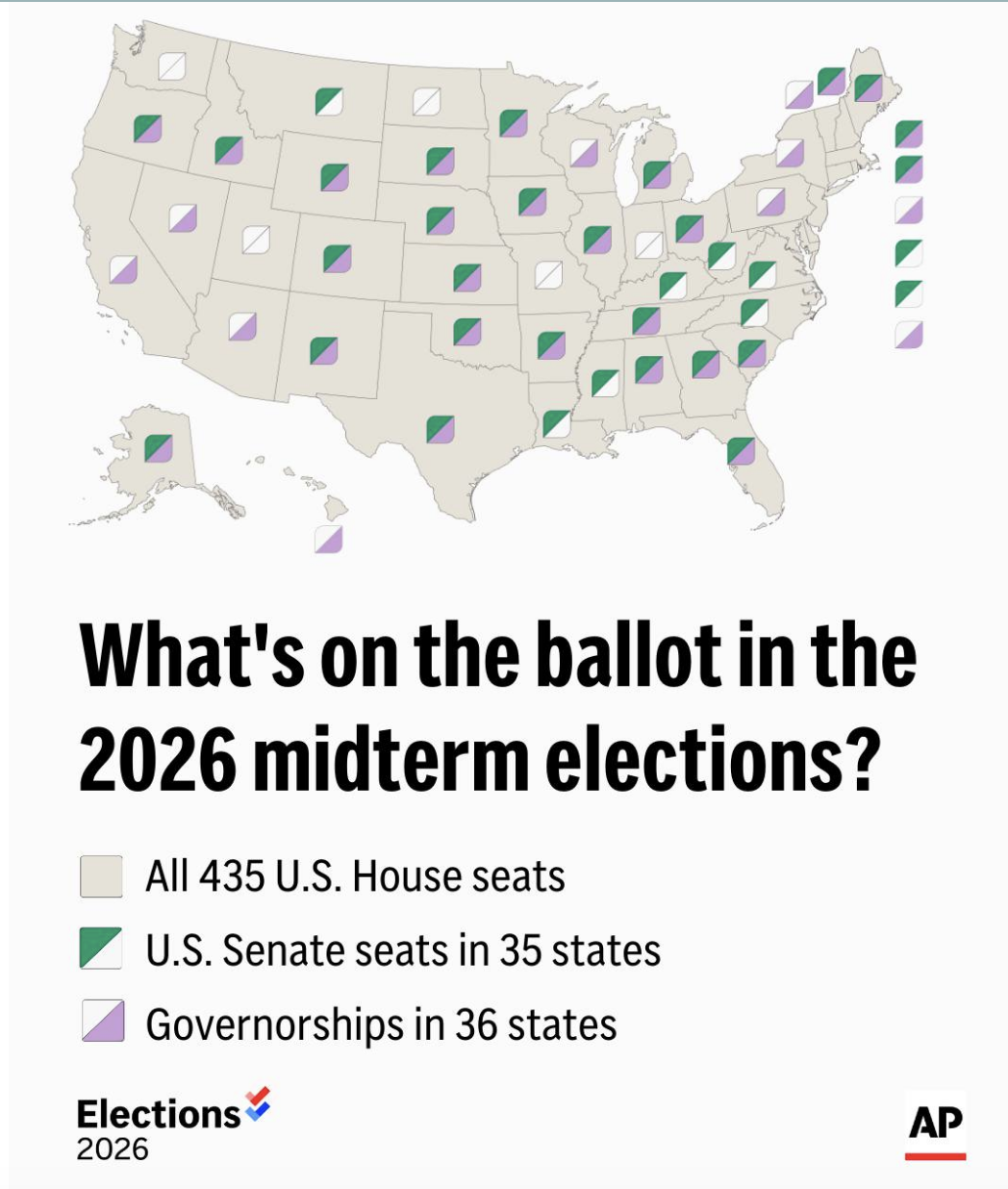
The 2026 election will take place during President Trump’s second term. It will be the first nationwide congressional election of that term. Whether Republicans keep control of Congress may influence the next two years of his presidency.
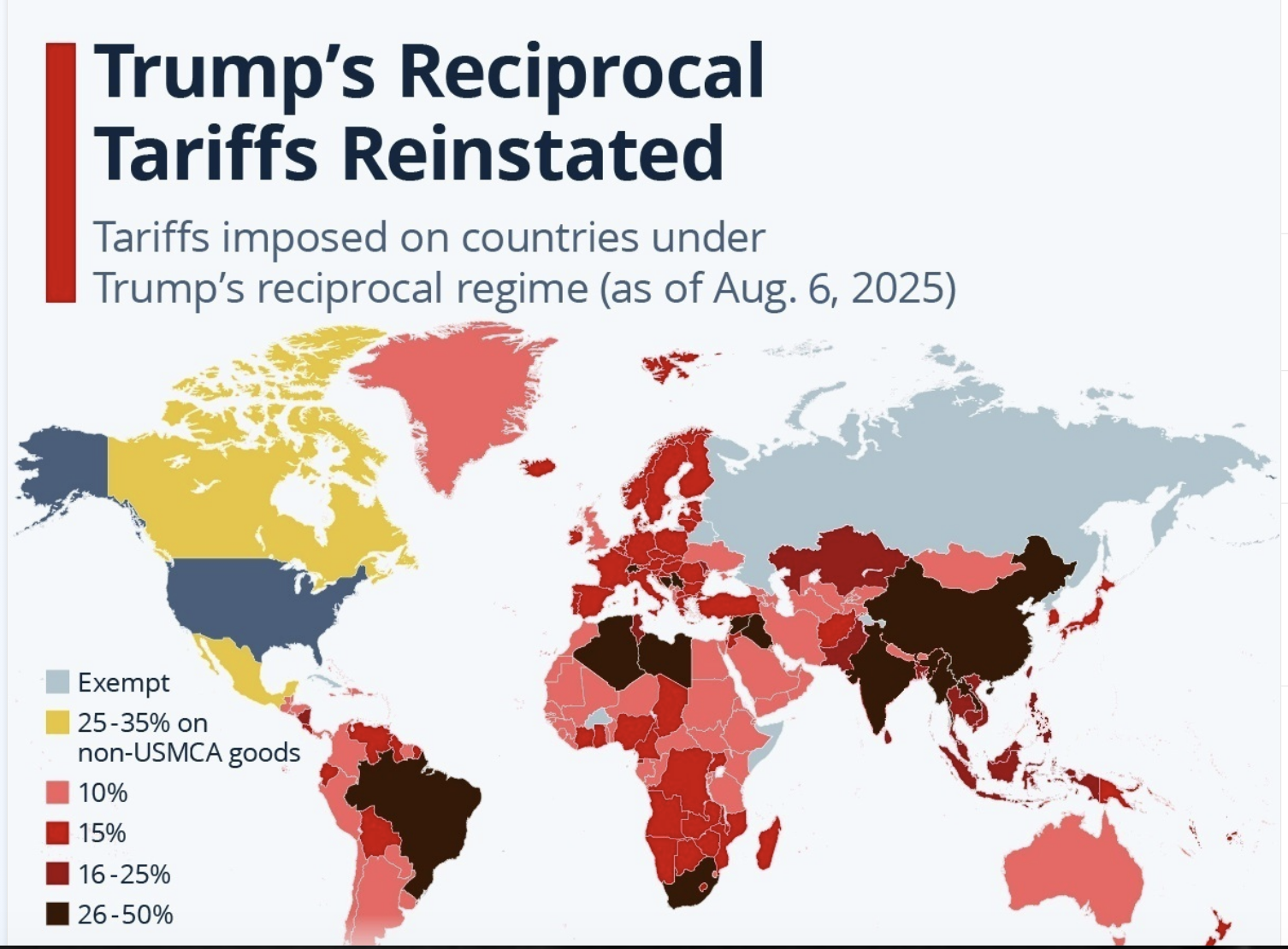

Economic concerns, tariffs, and the conflict involving the United States and Iran have become major political questions in 2026. Supporters of the president defend aspects of his trade and national-security approach; critics question the economic and human costs. These are subjects voters may weigh differently.
No election result is guaranteed. Historical losses for the president’s party do not prove what voters will do this November. A current-events companion article can examine the latest developments without turning this long-lasting lesson into an election prediction.
G. What Can Change? What Stays the Same?
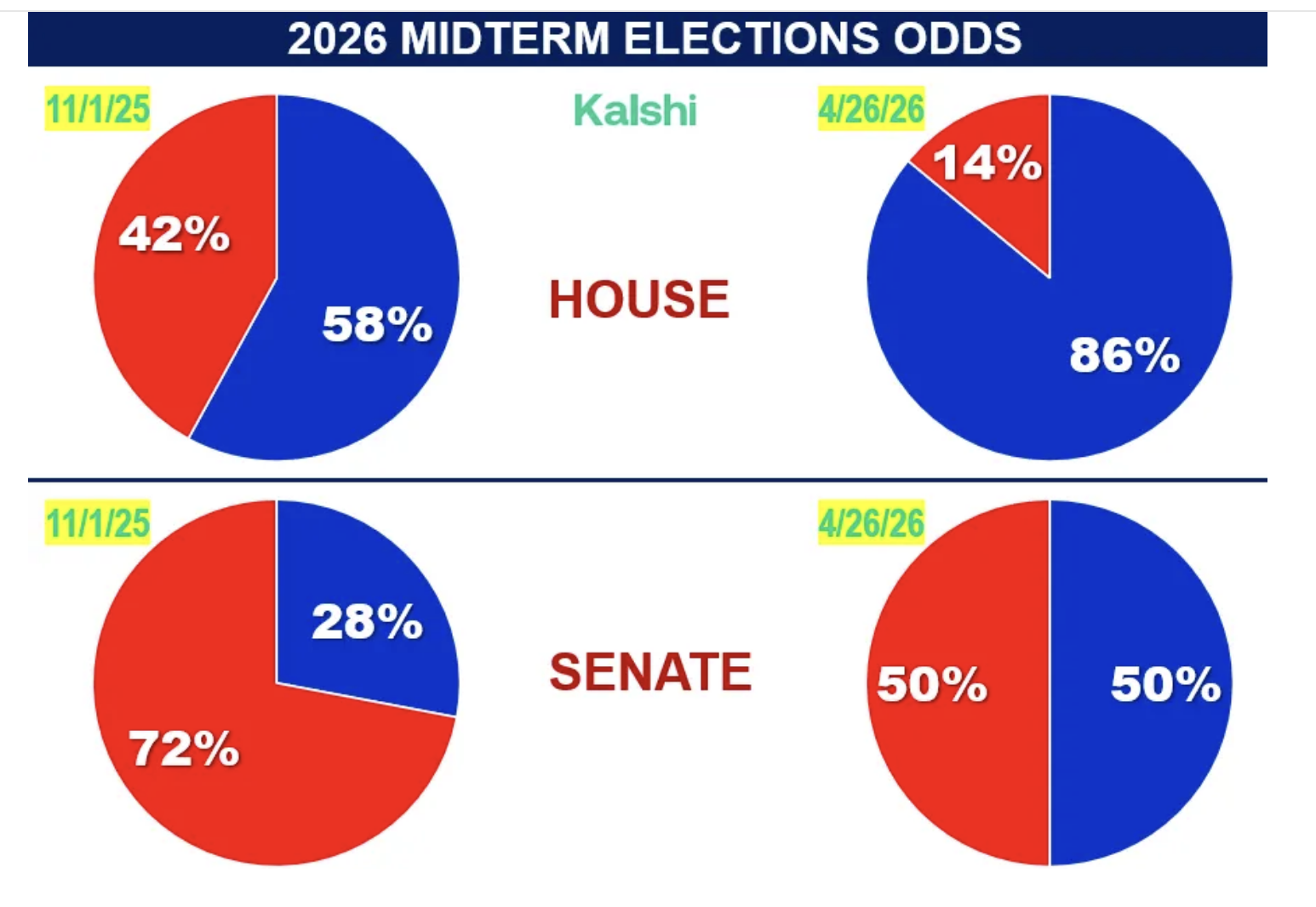
If Republicans retain control of both the House and Senate, Trump may have greater opportunities to pass legislation that Republican lawmakers support. But members of the same party do not always agree. Congress is not a rubber stamp.
If Democrats win one chamber, divided government could make major legislation harder to pass. That chamber could conduct oversight hearings, demand information within its authority, and oppose budget or policy measures. If Democrats win both chambers, the president would face more opposition in Congress, and compromise might be necessary for major legislation.
A change in Congress does not remove a president from office. The president still leads the executive branch, may veto legislation, directs federal agencies within the law, and exercises constitutional foreign-policy responsibilities. Congress also retains its own powers, including federal appropriations and oversight.
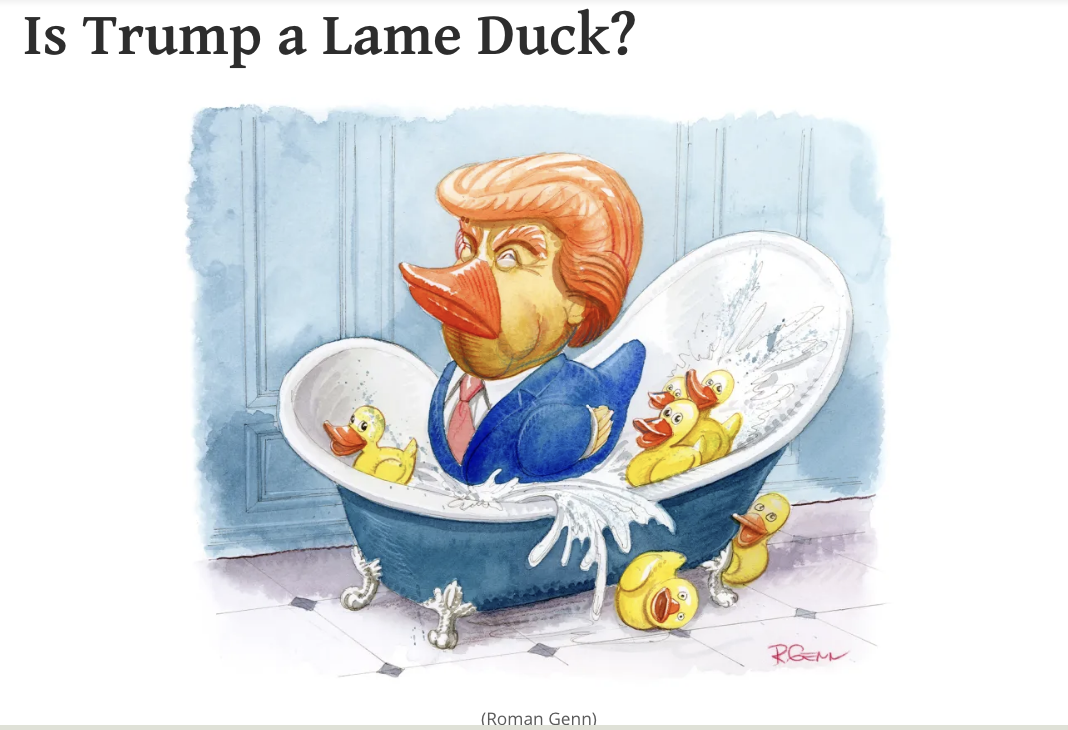
People sometimes call a president in the final part of a presidency a “lame duck.” This is a political description, not the loss of the office’s constitutional powers. Trump cannot be elected to a third presidential term under the Twenty-Second Amendment. That limit is separate from the outcome of the 2026 midterms.
The House has the power to impeach a federal official. The Senate holds an impeachment trial; removing a president requires a two-thirds Senate vote. Winning the House alone does not remove the president.
H. What This Means for Our Communities
Congress makes decisions about immigration laws and funding, federal health and education programs, taxes, and many other matters. State and local elections also affect schools, roads, and community services. It is worth understanding which level of government actually controls a particular issue.
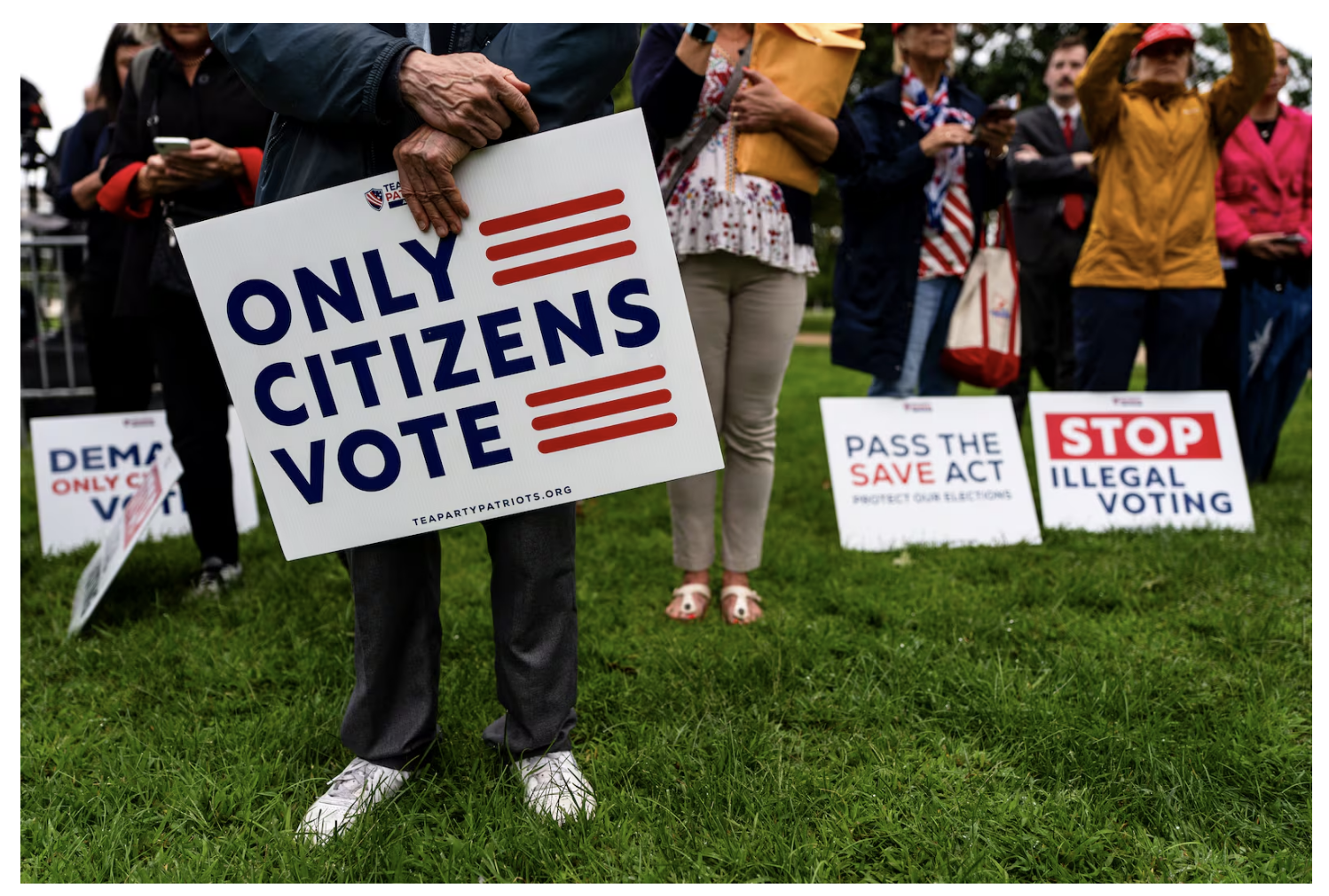
Some residents can vote in federal elections; others cannot. Federal voting rights depend on citizenship and other eligibility rules. But the laws Congress passes can affect people regardless of whether they vote. Understanding public decisions is useful for everyone.
Civic education also means knowing how to read a law, recognize a rumor, identify an official source, follow a representative’s work, and ask thoughtful questions. The purpose is informed participation and understanding—not loyalty to a party.
I. Five Things to Remember
1. Americans elect a president every four years, but elect all House members every two years.
2. A midterm election can change control of Congress without changing the president.
3. The House and Senate make laws; the president carries out laws; courts interpret laws.
4. The president’s party often loses House seats in midterms, but history does not guarantee a result.
5. Even people who cannot vote can be affected by the decisions of elected officials.
J. Words to Know & Sources
1) Midterm: An election held halfway through a president’s four-year term. 2) Congress: The House of Representatives and Senate together.
3) House: A chamber whose voting members face election every two years.
4) Senate: A chamber of 100 members, each serving six years.
5) Veto: The president’s rejection of a bill.
6) Oversight: Congress’s work examining how the government uses its powers.
7) Divided government: When different political parties control the presidency and at least one chamber of Congress.
8) Lame duck: A leader approaching departure from office or unable to seek another term.
Sources for editorial verification: U.S. Constitution, Articles I–III and Amendments XXII; U.S. House and Senate institutional histories; American Presidency Project, “Seats in Congress Gained/Lost by the President’s Party in Mid-Term Elections” (updated July 13, 2026); Associated Press reporting on the Iran conflict and tariffs (October 2026). URLs are listed below.
Editorial note: Source English draft. Fact-check again before publication and translation; 2026 developments may change.