
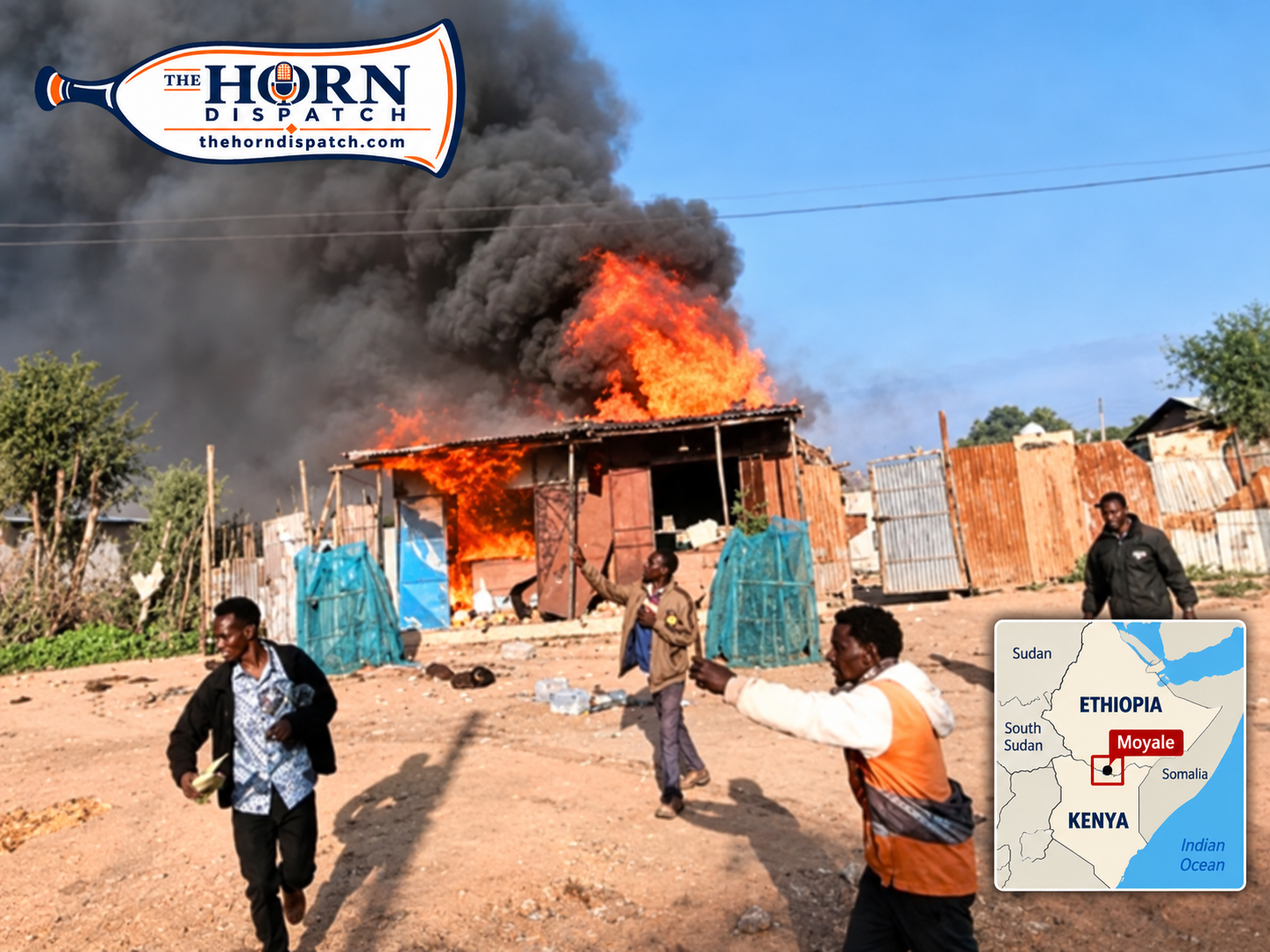
THE HORN DISPATCH - COMMUNITY JOURNALISM / NEWS ANALYSIS
OCTOBER 26, 2026
Oromia–Somali regional tensions, contested claims, civilian displacement, and emerging reports
• Information current to October 26, 2026
A. TOPIC — WHAT HAPPENED?
Fighting in Moyale along the Ethiopia–Kenya border has killed at least nine people and displaced thousands following clashes involving Oromo and Somali groups. Reuters reported October 23 that about 30 injured people had been admitted to a hospital in Ethiopian Moyale, and as of October 25, 2026, it is reported that at least 35,000 residents have been displaced and were sheltering in Kenyan Moyale.
Business operations at the Kenya-Ethiopia border in Moyale have been disrupted, with trucks unable to transport goods across the border in either direction. Several shops near the Kenyan side of the One-Stop Border Post have also been closed down amid fears of stray bullets and uncertainty over the security situation.
Marsabit County Commissioner Stanley Kamande noted this during a visit to Moyale Sub-County to assess the security situation and the conditions of displaced families fleeing the ongoing conflict.
Kamande said approximately 15,000 refugees were living in camps, while another 20,000 had been integrated into local communities.
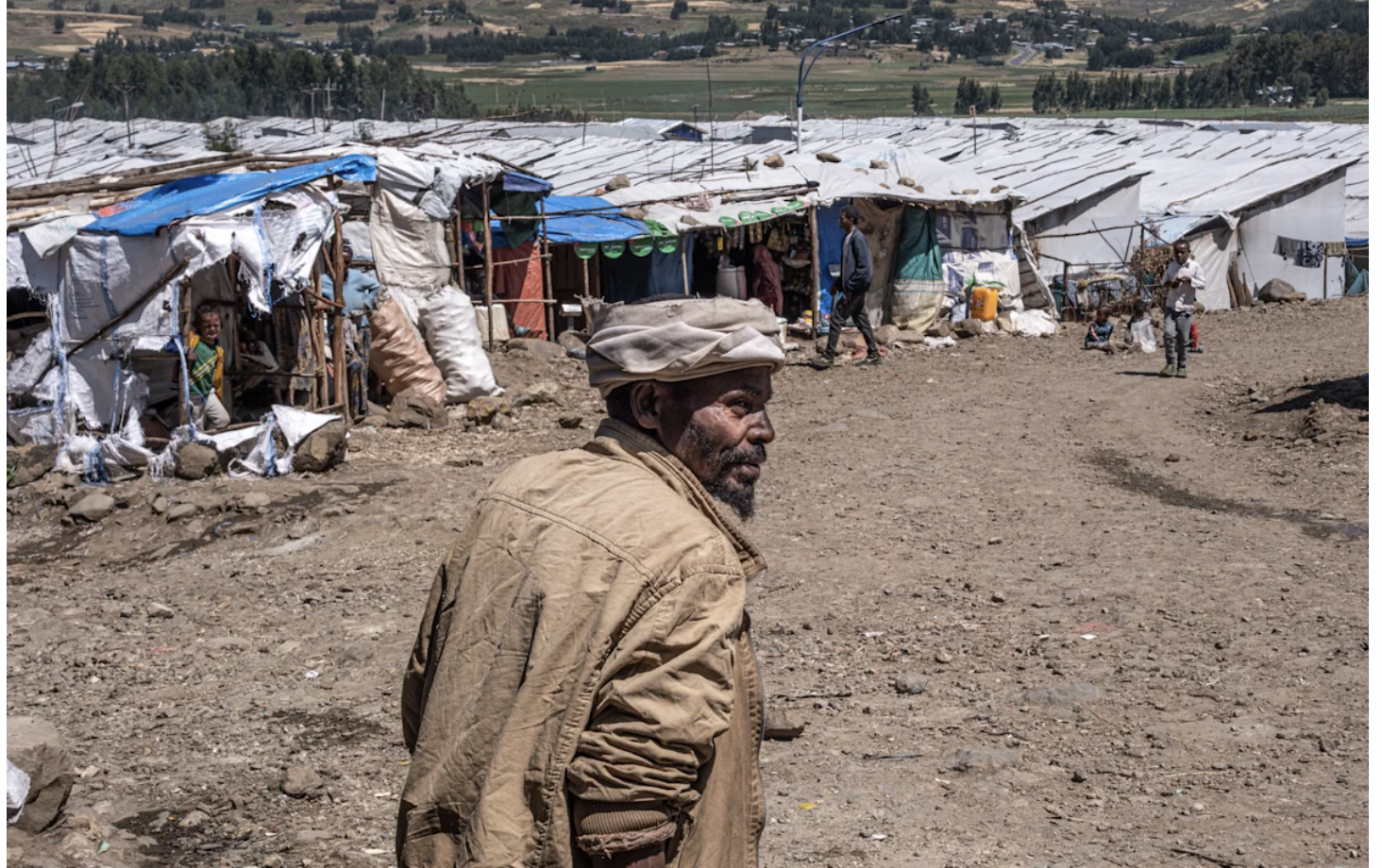
A man walks at the Bakelo Camp housing thousands of internally displaced Amharas resulting from the conflict in Ethiopia’s Oromia region in Debre Berhan, on October 19, 2026 [File Marco Simoncelli/AFP]
He commended humanitarian organizations and residents of Moyale for providing food, water and other emergency services.
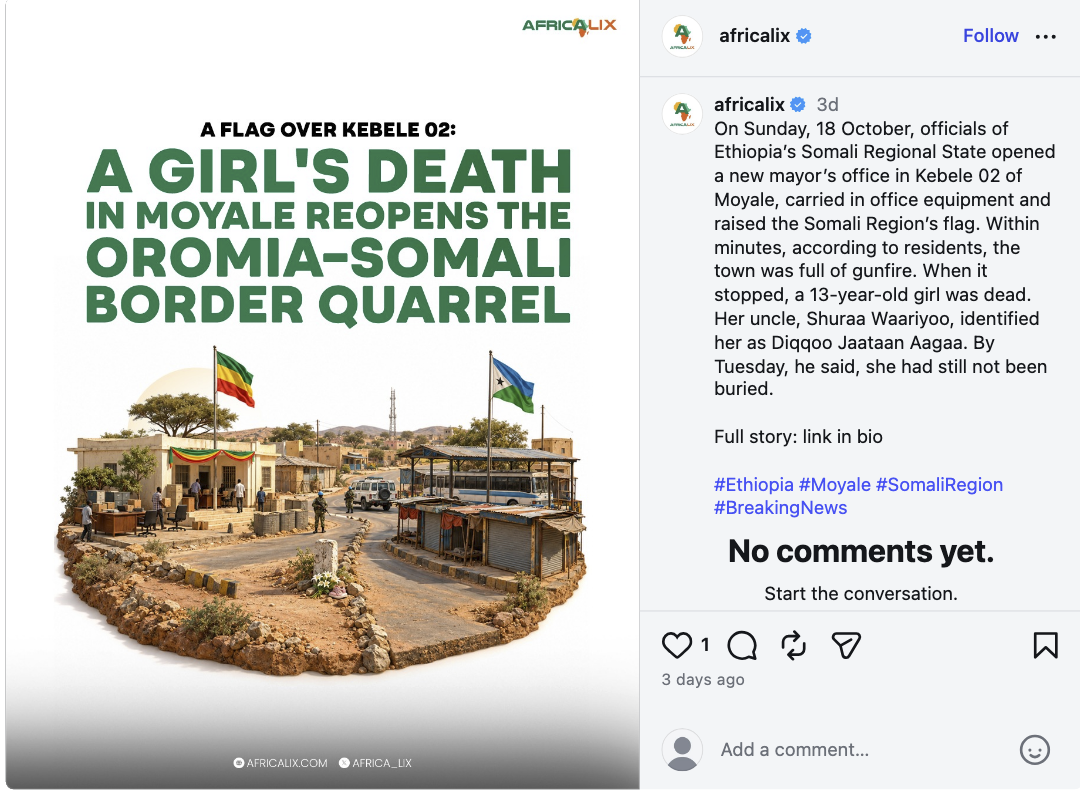
Local reporting traces rising tensions to October 18, when the opening of a Somali Regional State administrative office and the raising of its flag in a disputed section of Moyale were followed by gunfire and the death of a 13-year-old girl. The parties disagree over the circumstances of her death.
Fighting intensified in Moyale on October 21–22, with Reuters confirming that gunfire continued through Friday, October 23. Subsequent local reports indicated that heavy gunfire persisted in parts of Moyale and nearby Hudet on Saturday, October 24. As of October 25, the conflict continued to cause significant displacement into Kenya, although the current intensity of fighting remains unclear.
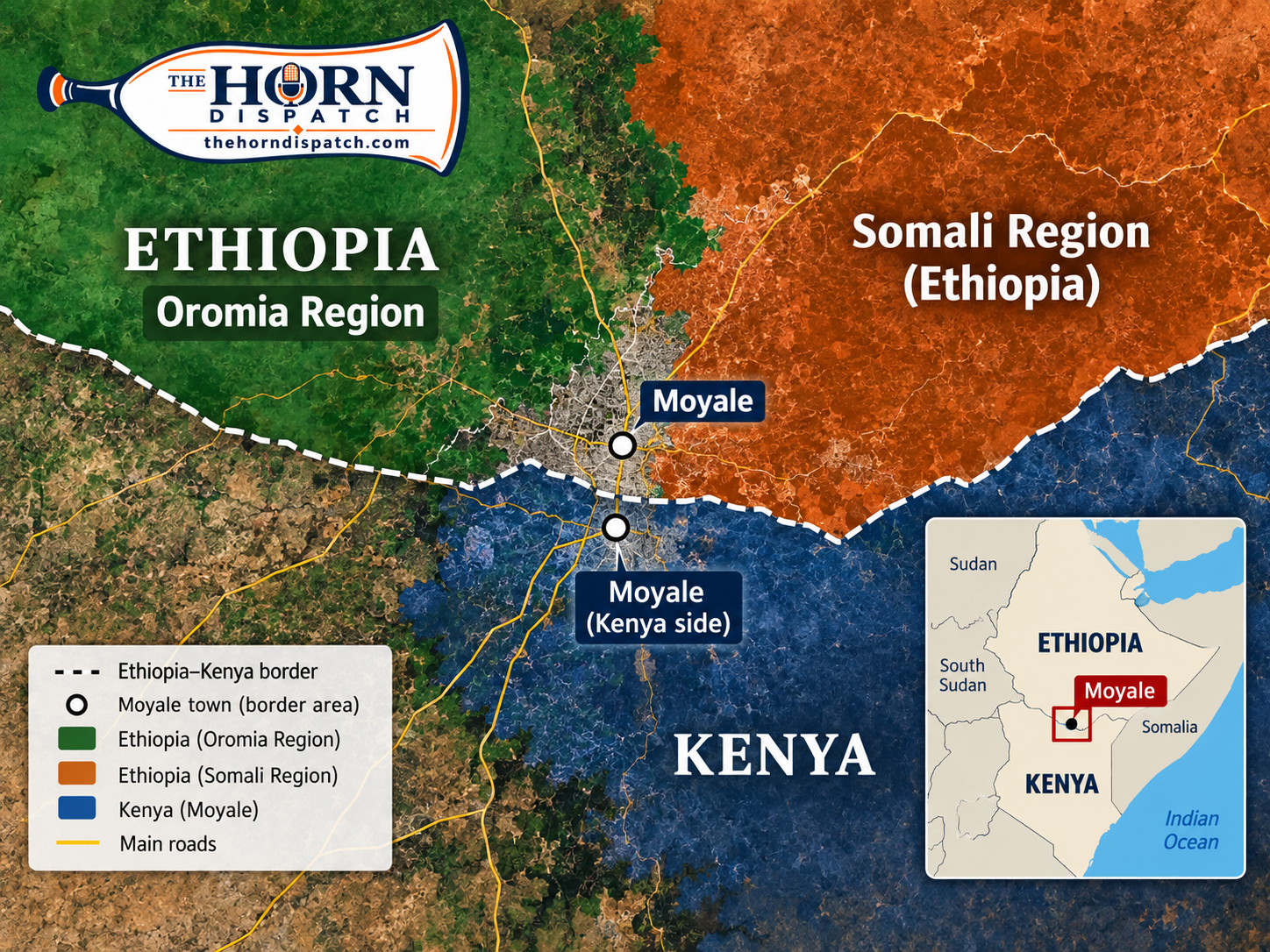
B. LOCATION CONTEXT — WHERE IS THIS HAPPENING?
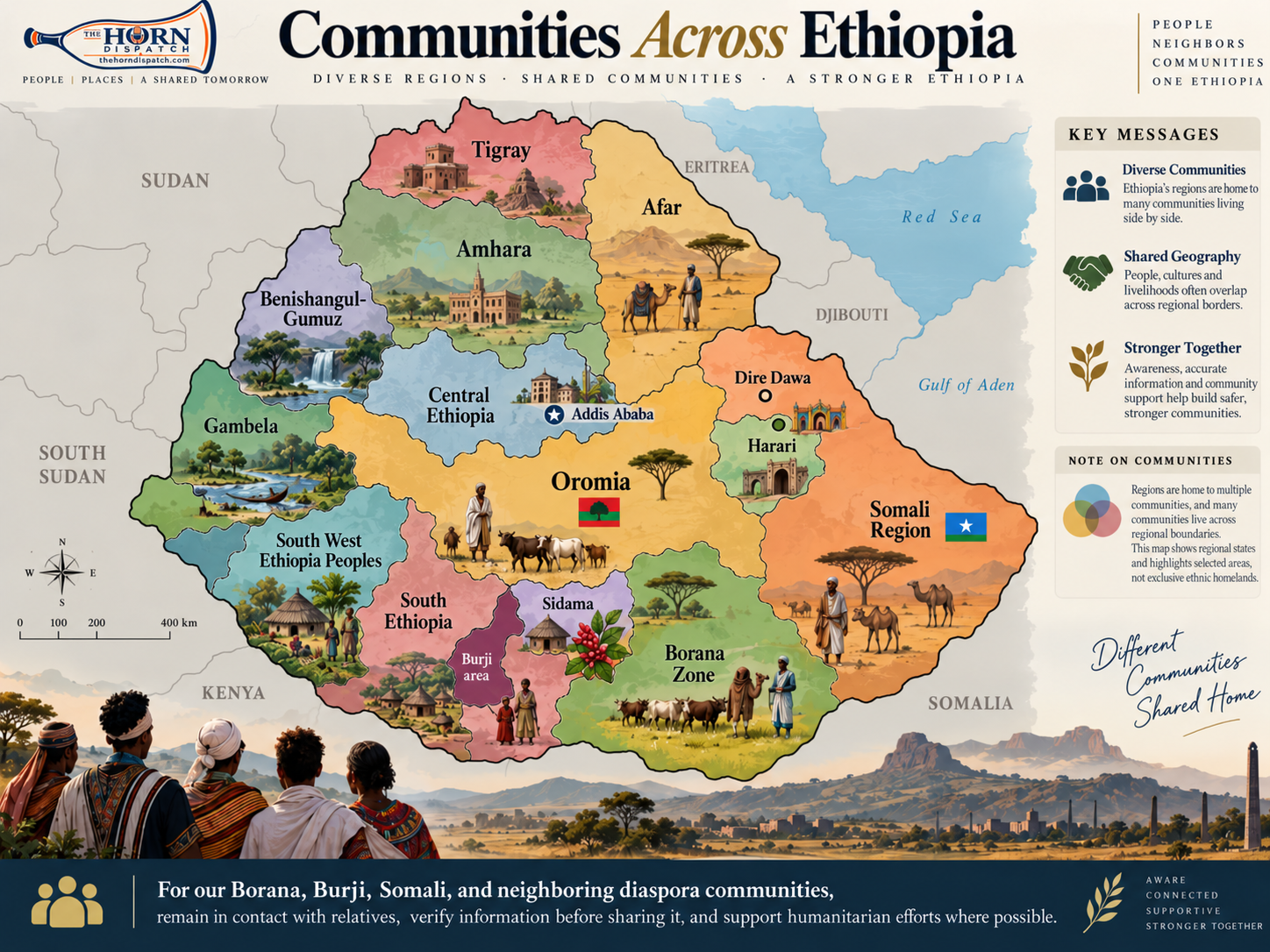
Moyale is a major border crossing between Ethiopia and Kenya, located approximately 780 kilometers (485 miles) north of Nairobi and 775 kilometers (482 miles) south of Addis Ababa by road. On the Ethiopian side, Moyale lies near the boundary between Oromia’s Borana Zone and the Somali Region’s Dawa Zone, while the Kenyan side is located in Marsabit County.
The area is home to communities whose shared histories, identities, and relationships extend across national and regional borders, which do not always reflect the realities of community life on the ground.
Addis Standard reported fighting or security incidents in and around Moyale as well as parts of Gumi Eldallo, Wachile and Arero districts. These are reported locations, not verified territorial-control positions.
A family contact in Yabello, farther north, reported on October 23 that injured people were being treated locally and schools were closed or disrupted because of security fears. The Horn Dispatch has not independently confirmed hospital admissions, which schools closed, or who ordered closures.
C. AGREED-UPON FACTS — WHAT IS VERIFIED?
According to The Standard, the recent violence between Ethiopia’s Oromia (Region Four) and Somali (Region Five) regional communities was reportedly triggered by two incidents: the killing of a young girl on October 18 in the Borana Zone and the raising of the Somali regional flag in territory claimed by Oromo authorities.
Local residents and officials reportedly viewed the flag as an encroachment on Oromo-administered land, escalating existing territorial and administrative tensions into armed clashes.
The dispute involves the predominantly Oromo-speaking Borana communities and neighboring Somali-speaking communities, including the Garre clan. The precise sequence of events and responsibility for the violence remain contested.
A 13-year-old girl died during the October 18 confrontation, according to Addis Standard; accounts differ regarding the fatal shooting.
Reuters reported at least nine deaths and approximately 30 hospital admissions on October 23, citing a Moyale hospital official. These are provisional figures, not a final toll.
Kenyan authorities reported at least 2,500 displaced arrivals in Kenyan Moyale. Kenya Red Cross has been responding to urgent shelter and basic-needs concerns.
The violence is geographically and operationally separate from Ethiopia’s northern Tigray conflict, although both affect national security and civilians.
D. DEVELOPING / DISPUTED QUESTIONS
Who fired first and who bears responsibility for particular deaths? What administrative boundaries and decisions do Oromia and Somali regional authorities rely upon? How many other districts are affected? Which schools and transport links remain closed? Is federal mediation or intervention underway?
E. COMPETING ACCOUNTS AND MEDIA COVERAGE
Oromia/Borana-linked accounts
Residents cited by Addis Standard have accused Somali regional police of shooting and killing a 13-year-old girl on October 18 in an area administered by the Borana Zone of Ethiopia’s Oromia Region. According to these accounts, the girl's death heightened existing tensions over territorial boundaries and administrative authority, particularly following the raising of the Somali regional flag in an area Oromo residents consider part of their territory. Some residents viewed these developments as an encroachment on Oromo-administered land and described the subsequent fighting as a response to those actions. Other accounts, however, suggest that the girl may have been killed by crossfire rather than deliberately targeted by Somali regional forces. The circumstances surrounding her death, including who fired the fatal shot and whether it was intentional, remain disputed and have not been independently established.
Somali/Garre-linked accounts
Somali-side residents cited in local reporting have disputed allegations that Somali regional forces were responsible for initiating the violence. Somali-oriented news outlets and community sources have instead accused Oromia regional forces of attacking Somali civilians and contributing to the escalation of fighting. These accounts reflect a competing interpretation of the conflict, in which Somali communities and authorities view themselves as defending their residents and what they consider legitimate territorial and administrative interests.
Cross-border reporting
Reuters and the Associated Press foreground the fatalities, flight into Kenya, cross-border stray-bullet injuries and humanitarian response. Their accounts do not adjudicate the competing administrative boundary claims.
F. ANALYSIS — WHAT DO THE CLAIMS MEAN?
The territorial dispute reflects competing claims of administrative authority, with both sides believing their position is legitimate and that they are defending territory rightfully under their jurisdiction. For Oromo authorities and communities, the raising of the Somali regional flag in disputed territory may be viewed as an encroachment on their land. For Somali authorities and communities asserting jurisdiction over the same area, the flag may represent what they believe to be their lawful administrative authority. However, neither side's claim, nor the display of a regional flag, independently establishes legal ownership or jurisdiction.
The conflict should not be reduced to simply “Oromo versus Somali.” It involves competing territorial claims, regional governments, security forces, and local communities whose historical, social, and economic relationships often overlap. Understanding that both sides believe they are defending legitimate interests is essential to explaining the dispute without endorsing either claim. The actions of armed actors should not be attributed to entire ethnic populations.
This conflict in southern Ethiopia is separate from the fighting in northern Ethiopia, involving different actors, territorial disputes, and immediate causes. Treating them as a single conflict would obscure these important distinctions.
G. Burji Community in Moyale, Kenya, Provides Shelter and Food to Displaced Families
The Burji are a distinct Cushitic-speaking ethnic community originating from southern Ethiopia, particularly the Burji highlands near present-day Soyama and Hagere Mariam. They have longstanding historical and cultural relationships with neighboring Borana Oromo and other communities in southern Ethiopia. Beginning in the late nineteenth and early twentieth centuries, Burji families migrated into northern Kenya, establishing communities in Moyale and Marsabit. During the British colonial period, additional Burji families were encouraged to settle in Kenya because of their agricultural expertise.
Over generations, the Burji became an established part of Moyale's social and economic life, contributing to farming, commerce, transportation, and cross-border trade. Today, Burji communities live on both sides of the Ethiopia–Kenya border, maintaining family, cultural, and economic relationships with neighboring Borana, Somali, and other communities. Although the current conflict is primarily described as involving Oromia and Somali regional forces, its humanitarian consequences extend to the wider population of this interconnected border region.
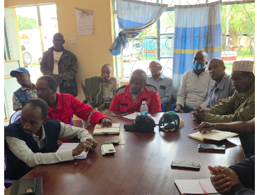
Burji community leaders in Moyale, Kenya, are working alongside other local leaders to shelter and support families fleeing the violence across the Ethiopian border.
According to local community representative Woche Guyo, their resources are overwhelmed, and they are urgently appealing to the Kenyan government and well-wishers for humanitarian assistance.
As thousands of Ethiopians flee across the border into Kenya, members of the Burji community in Moyale are helping accommodate displaced families, according to a firsthand account shared with The Horn Dispatch.
Woche Guyo, a Burji historian and community chronicler in northern Kenya, reported to The Horn Dispatch on October 25 that Manyatta Burji Madrasa is accommodating people displaced by the fighting. According to Guyo, local administrators, religious leaders, and community volunteers have helped provide temporary shelter, breakfast, lunch, and places to sleep. He particularly acknowledged the contributions of local women who have volunteered their time to prepare meals for displaced families.
Guyo identified local chiefs, religious leaders, and other community representatives among those coordinating assistance. The Horn Dispatch has not independently verified the number of displaced people accommodated at the madrasa or the participation of each individual named.
Guyo also appealed for additional humanitarian assistance, warning that clean drinking water is running low and community resources are increasingly strained. These concerns are consistent with reporting from the Kenya Red Cross and Kenyan authorities documenting shortages of food, clean water, shelter, and sanitation supplies as displaced families continue arriving in Moyale.
Humanitarian Needs and How to Help
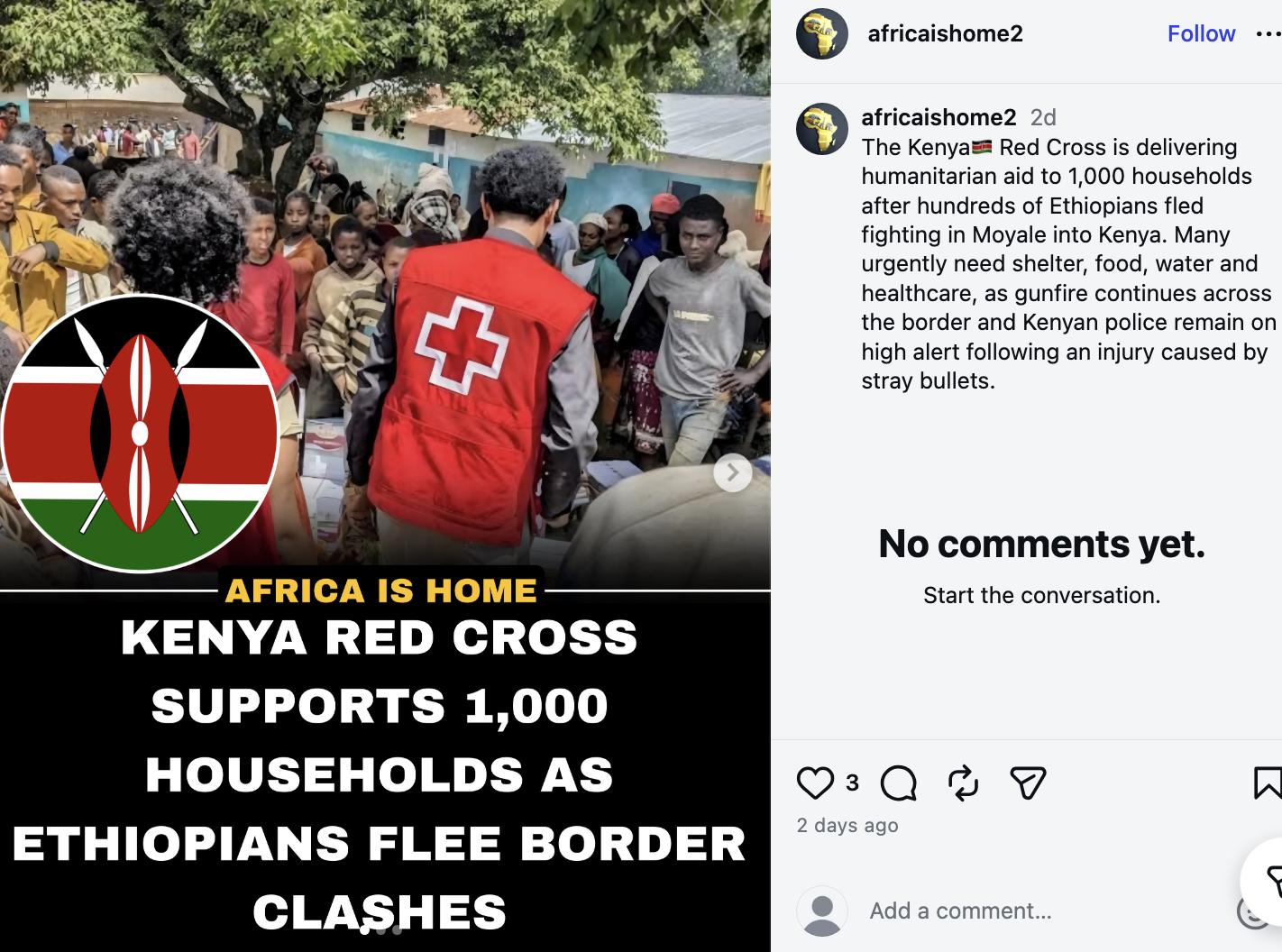
As thousands of displaced people seek refuge in Moyale, Kenya, humanitarian needs are growing. The Kenya Red Cross has warned of worsening shortages of food, clean water, sanitation facilities, and other essential supplies.
“We urgently need more well-wishers to support us with food and water. There is also a need for sanitary supplies and more toilets to avert diarrheal diseases,” Malik Adan, Kenya Red Cross head of the Upper Eastern region, told reporters.
Community members, organizations, and well-wishers interested in assisting displaced families can contact The Horn Dispatch at info@ambalaw.com. We can help connect interested individuals and organizations with Woche Guyo and local community representatives coordinating humanitarian relief efforts in Moyale, Kenya, particularly those seeking to provide food, clean water, sanitation supplies, and other urgently needed assistance.
H. ATTORNEY AMBA’S TAKEAWAY For Horn of Africa Diaspora
The violence unfolding in Moyale is personal to me. My family comes from southern Ethiopia, with deep connections to Yabello, Mega, and communities on both sides of the Ethiopia–Kenya border. My family has ties to the Borana and Burji communities, including relatives living in Moyale, Kenya. These are not distant places. They are communities where our families live and where the consequences of this conflict are being felt directly.
As troubling as the violence is, it is important to understand the conflict in its historical and political context. Territorial and administrative disputes between Oromia and the Somali Region are not new. Both sides believe their territorial claims are legitimate and that they are defending land rightfully under their authority. Understanding these competing perspectives does not mean endorsing either claim or justifying violence.
We should also avoid interpreting this conflict as evidence that all of Ethiopia is descending into war. The fighting in Moyale is distinct from the conflicts in northern Ethiopia, involving different actors and immediate causes. Ethiopia's federal government has historically intervened in disputes between regional authorities, although whether it can successfully contain the current violence remains uncertain.
International reporting, particularly in American media, can sometimes create the impression that violence in one region reflects conditions throughout Ethiopia. We should take the suffering in Moyale seriously without losing sight of the country's geographical, political, and historical complexity.
For our Borana, Burji, Somali, and neighboring diaspora communities, I encourage everyone to remain in contact with relatives, verify information before sharing it, and support humanitarian efforts where possible.
A Call for Peace, Protection, and Federal Intervention
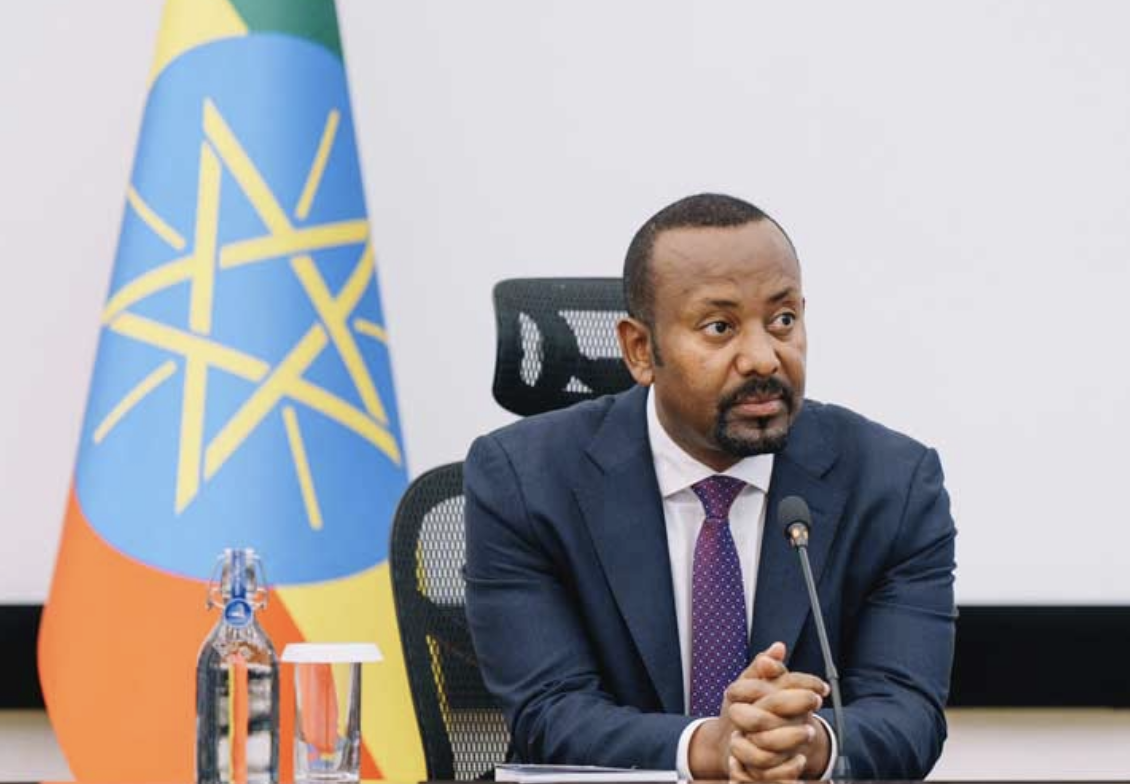
Prime Minster of Ethiopia: Abiy Ahmed Ali
image source: X @AbiyAhmedAli
This is not the first time violence has erupted between communities in this region, and unfortunately, without lasting solutions to the underlying tensions, it is unlikely to be the last.
As of the morning of October 26, 2026, The Horn Dispatch continues to receive reports from sources on the ground that fighting is ongoing. Given the seriousness of the violence and the growing humanitarian crisis, we would have expected a more visible and decisive intervention by the Ethiopian federal government at this stage. We hope that Prime Minister Abiy Ahmed's government will act urgently, in coordination with the relevant regional authorities, to bring the fighting to an end, protect civilians, and address the underlying causes of the conflict. We also hope that the Kenyan government will continue working to protect displaced families who have crossed the border and support efforts toward a peaceful resolution.
Above all, we must remember that these communities have lived alongside one another for generations, sharing families, markets, livelihoods, and histories. The actions of armed groups must not define entire communities. Our immediate priority must be to end the violence, protect civilians, assist displaced families, and preserve the relationships that will remain long after the fighting ends.
— Attorney Yasin G. Amba
Founder and Editor-in-Chief, The Horn Dispatch