
This article is part of The Horn Dispatch’s News Analysis Series, created to help our community understand the news, the context behind it, and why it matters.
To hear an Masara translation of this English-language article, click on the following link (start at 0:58): https://youtu.be/WHcbzfRYvI4
A tragedy, postpartum mental health, criminal responsibility, and the limits of a mistrial
Updated October 13, 2026 • Massachusetts • Plain-English community edition
THE CENTRAL FACT: Lindsay Clancy has not been convicted or acquitted. Her September trial ended without a verdict. A judge later rejected one request for acquittal, and the question of a second trial is still open.
A. Topic | What this case is about

In January 2023, three young children died at their family home in Duxbury, Massachusetts. Their mother, Lindsay Clancy, a former nurse, was charged with murder. During the trial, her defense argued that severe postpartum mental illness meant she lacked criminal responsibility.
Prosecutors argued that the evidence showed planning and awareness of wrongdoing. The jury could not agree, and the judge declared a mistrial on September 4, 2026.
The September presentation explained the tragedy and the competing arguments. This October update adds what happened in court after the mistrial, why a reported 11-to-1 split was still not a verdict, and what the court may decide next.
B. Location Context
B1. Location of Event
The deaths occurred on January 24, 2023, at the family home in Duxbury, Massachusetts. The criminal proceeding is in Plymouth Superior Court, under Massachusetts state law. State prosecutors, not federal officials, decide whether to pursue the charges.
B2. Impacted Locations and Communities
The case is local to Massachusetts but has reached families nationwide. It raises questions about postpartum care, family support, mental illness, child safety, jury service, and responsible online discussion. For Horn of Africa diaspora families, the useful question is how to recognize a serious crisis and seek qualified help without shaming anyone.
C. Agreed-Upon Facts and the Trial Record
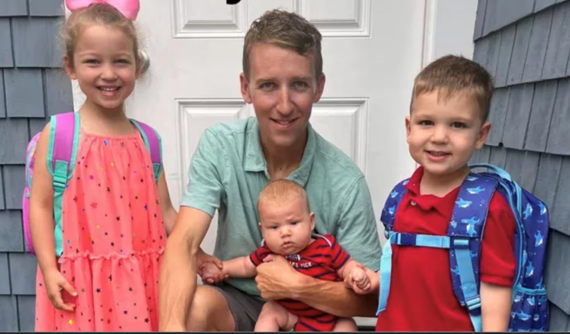
The children were Cora, age five; Dawson, age three; and Callan, about eight months old. Their names deserve to be remembered without turning their deaths into entertainment.
Clancy survived an apparent suicide attempt after the killings and was left with serious injuries. The criminal trial lasted roughly six weeks; jurors heard from investigators, relatives, clinicians, and psychiatric experts.
What the prosecution and defense argued

PROSECUTION POSITION: Prosecutors argued that Clancy planned the killings, including by sending her husband out on errands, and that other conduct and evidence showed she understood what she was doing.
This was the prosecution’s argument—not an established finding of guilt.
DEFENSE POSITION: The defense argued that she suffered from a severe postpartum psychiatric crisis and could not be held criminally responsible under Massachusetts law. Her care history, medicines, symptoms, and expert testimony were central to this explanation. That argument was also contested.
The legal rule in basic English

Massachusetts law asks more than whether a person had a diagnosis. When lack of criminal responsibility is properly raised, the prosecution must prove criminal responsibility beyond a reasonable doubt.
A person may lack criminal responsibility if, because of a mental disease or defect, they lacked substantial ability either to understand the wrongfulness of the act OR to control their conduct to follow the law. The two tests are alternatives, not requirements that both fail. The defendant does not bear the burden of proving the defense.
This is why being mentally ill and being legally not responsible are not the same thing. The jury must evaluate the evidence under the specific legal test.
Key dates: what changed after our September report
Sept. 4, 2026
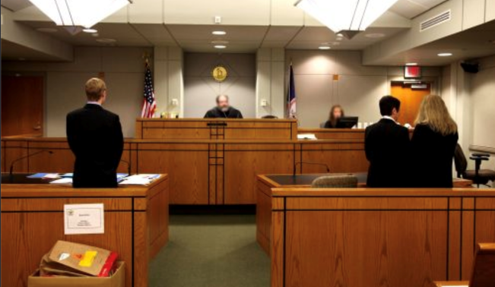
After seven days of deliberations, the jury could not reach a unanimous verdict. Judge William Sullivan declared a mistrial. Reports described an 11–1 split favoring a lack-of-criminal-responsibility acquittal.
Sept. 29, 2026
At the first post-mistrial hearing, the parties discussed outstanding motions and a possible new trial. Prosecutors had not announced whether they would retry the case. The court scheduled another hearing for November
Oct. 1, 2026
Judge Sullivan denied the defense’s renewed request for a required finding of not guilty. He held that the evidence was sufficient for a rational jury to consider guilt and criminal responsibility. This was not a guilty verdict.
Oct. 10, 2026
News reporting described a defense request for an evidentiary hearing concerning the holdout juror. The defense alleges problems with deliberations; these claims are not proven findings.
Nov. 2, 2026
Next scheduled hearing, as reported by court coverage. Future date; no ruling or retrial decision should be presumed.
D. Developing Facts | The case is not over
Why eleven votes did not end the case
A criminal jury normally must reach a unanimous verdict. Even if eleven jurors favor one outcome, the jury has not returned a verdict when the twelfth juror disagrees. A hung jury means the jurors could not agree; a mistrial ends that trial without a final verdict. It is neither a conviction nor an acquittal.
What the October 1 ruling actually means
The judge rejected the defense’s argument that the evidence was legally too weak to sustain the charges. In this kind of ruling, a judge asks whether a reasonable jury could find the required facts when the evidence is assessed under the applicable legal standard. The judge did not decide that Clancy was guilty, nor did he order a retrial in that ruling.
The new double-jeopardy dispute
The defense argues that the trial should not have ended in a mistrial and that trying Clancy again would violate constitutional protections against double jeopardy. A properly declared mistrial because a genuinely deadlocked jury cannot agree generally may permit a retrial; whether the judge acted properly here is contested. The defense’s allegations about the holdout juror are not court findings. The court must resolve any pending challenge.
As of October 13, reporting reviewed for this update did not establish that prosecutors had announced a final retrial decision or that a second trial date had been set. That status can change after court filings or the November 2 hearing.
E. How This Is Being Covered
EA. Progressive / Maternal Mental-Health and Family-Support Framing
EA. Progressive / Women's Mental Health and Family Support
One side of the debate, often associated with progressive views, focuses on women's mental health, motherhood, and family support.

Supporters argue that Lindsay Clancy was suffering from a serious mental-health condition after childbirth and needed medical care and understanding.
Women wearing pink gathered outside the courthouse to show support for Clancy. Many believe her mental illness should be considered when deciding whether she is criminally responsible.
This side also raises questions about whether doctors, hospitals, and families are doing enough to recognize and treat mental-health problems in new mothers.
Supporters emphasize compassion, better medical treatment, and stronger family and community support.
This perspective is often connected to progressive ideas about women's health and mental-health care, although not every supporter necessarily identifies as politically liberal.
The main message: Serious mental illness should be understood and treated, not simply judged or punished. However, the medical and legal questions remain disputed, and the deaths of Cora, Dawson, and Callan must not be forgotten.
EB. Child safety and accountability framing
EB. Conservative / Law and Order / Criminal Accountability
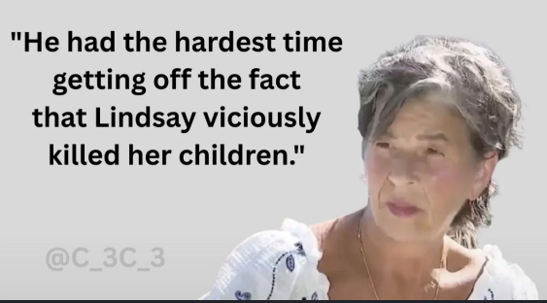
Another side of the debate, often associated with conservative views about law and order, focuses on protecting children, personal responsibility, and holding people accountable for their actions.
This side focuses on the three children, Cora, Dawson, and Callan, and argues that their deaths must remain at the center of the case.
Supporters of this view point to evidence presented by prosecutors that Clancy planned the killings, including sending her husband away from the house.
They argue that having a mental illness does not automatically mean someone is not legally responsible for a crime.
This perspective emphasizes protecting children, examining the evidence carefully, and making sure the law is applied fairly.
Some worry that public sympathy for Clancy could cause people to overlook the seriousness of what happened to the children.
This perspective is often connected to conservative ideas about law and order and personal responsibility, although people across the political spectrum share these concerns.
The main message: Mental illness should be taken seriously, but it does not automatically remove criminal responsibility. Justice requires protecting children, examining the evidence, and giving the accused a fair trial.

EC. Independent and non-aligned coverage
EC. Independent / Non-Aligned Coverage
Independent news coverage focuses on the facts, the evidence, and what the law says, rather than taking sides.
Reports say 11 jurors believed Lindsay Clancy was not criminally responsible because of mental illness, while one juror disagreed.
Because the jury could not reach a unanimous decision, the judge declared a mistrial. This means Clancy was neither convicted nor found not guilty.
The defense argues that Clancy should not be held criminally responsible. Prosecutors argue that the evidence shows she knew what she was doing. Both sides presented evidence to support their positions.
The judge ruled that prosecutors had presented enough evidence for the case to go to a jury. This does not mean the judge found Clancy guilty.
There is also disagreement about the one juror who refused to agree with the other 11. Some supporters have criticized that juror, but disagreeing with other jurors is not automatically misconduct. Any claim of improper behavior must be supported by evidence and reviewed by the court.
The main message: The role of independent journalism is not to decide whether Clancy is guilty or innocent. It is to explain what happened, what remains disputed, and how the legal system works, while treating the children, their family, and everyone involved with fairness and respect.

F. Takeaway for Our East African and Horn of Africa Communities
F. Lessons from Attorney Amba: We Have Each Other
The Lindsay Clancy case reminds us of something our African communities have understood for generations: A mother should not have to raise a child alone, especially in the days and weeks after giving birth.
In many African cultures, childbirth is not just an event for the mother and father. It is a family and community responsibility. Grandmothers, aunts, sisters, and other women come to stay with the new mother. They cook, clean, care for the baby, help with other children, and make sure the mother gets rest. Sometimes they stay for days, weeks, or even longer.
These traditions have been passed down for generations for good reason. They recognize that giving birth is a major physical and emotional experience and that a new mother needs care, rest, and support.
Life in America can be different. Families often live far apart. Parents work long hours, and new mothers may spend much of their time alone with their babies. American society places great importance on independence, but independence should not mean isolation.
We should not abandon our traditions simply because we now live in America. Hospitals, doctors, and modern medicine are important, and we should use them. Postpartum depression and postpartum psychosis are serious medical conditions that require professional attention. Postpartum psychosis, in particular, is a medical emergency. Family support cannot replace medical treatment, but it can help us recognize problems early and make sure mothers receive the care they need.
Our communities can learn several important lessons:
Continue our traditions of visiting, caring for, and staying with mothers after childbirth.
Make sure new mothers have help with cooking, cleaning, childcare, and everyday responsibilities.
Fathers, brothers, uncles, and other family members must also take responsibility. Supporting mothers is not only women's work.
Check on mothers regularly, listen to them, and make sure they have time to rest.
Take changes in mental health seriously and seek professional medical help when needed.
Do not allow the pressures of American life to separate us from the family and community connections that have supported us for generations.
The Lindsay Clancy tragedy does not mean that mothers with mental illness are dangerous. Nor can we know whether stronger family support would have prevented what happened in her home. But it reminds us why no mother should have to face the challenges of childbirth and early motherhood without support.
The lesson for our communities is simple: We have each other.
The same traditions of family, community, and shared responsibility that helped generations before us can continue to protect and strengthen our families here in America. We should preserve what works, embrace modern medicine, and make sure no new mother feels forgotten or alone.
That is how we honor our traditions while building healthier families for the next generation.