
THE HORN DISPATCH — NEWS ANALYSIS
This article is part of The Horn Dispatch’s News Analysis Series, created to help our community understand the news, the context behind it, and why it matters.
To hear an Afaan Borana translation of this English-language article, click on the following link (start at 0:54):
AT A GLANCE
Less than four years after a peace agreement ended Ethiopia’s devastating war in Tigray, major fighting has returned to northern Ethiopia.
Seven armed groups from different parts of Ethiopia have announced a new alliance against the federal government of Prime Minister Abiy Ahmed—including forces that were enemies only a few years ago.
Update Before Publication – October 05, 2026
Editor’s Note: This article was finalized on September 30, 2026. Because the situation is changing quickly, several important developments happened before publication on October 5.
Since September 30, federal and allied forces have made major gains in Tigray. They retook Mekelle’s airport, and by October 4, TPLF forces had withdrawn from Mekelle and government forces entered the city. This is a major setback for the TPLF, but it does not mean the fighting is over.
Fighting continued overnight into October 5, 2026. Airstrikes reportedly killed at least 17 people in Adwa and Sheraro, while federal and TPLF forces exchanged heavy artillery fire near the Tekeze River. Current reporting has not established who carried out the airstrikes.
Relations between Ethiopia and Eritrea have also become much worse. Ethiopia closed its embassy in Eritrea and expelled Eritrean diplomats. Eritrea then cut diplomatic relations with Ethiopia. Ethiopia continues to accuse Eritrea of helping armed opposition groups. Eritrea denies that claim.
There were also explosions in Addis Ababa on October 1. A source connected to the opposition alliance said the group carried out drone attacks, but the Ethiopian government did not confirm that account.
These developments do not change the main questions discussed in this article. But they show how quickly the conflict is moving. Readers should treat battlefield information in the September 30 article below as a snapshot of the situation at that time.
The Situation Now
Less than four years after a peace agreement ended Ethiopia’s devastating war in Tigray, major fighting has returned to northern Ethiopia.
The latest crisis is different from the last war.
Seven-armed groups from different parts of Ethiopia have announced a new alliance against the federal government of Prime Minister Abiy Ahmed. The alliance includes groups that were enemies only a few years ago—including the Tigray People’s Liberation Front (TPLF) and the Amhara Fano National Movement.
The alliance says its goal is to remove the current federal government and establish a transitional government. The federal government rejects the armed challenge and has accused outside countries, particularly Eritrea, of helping its opponents. Eritrea has denied similar accusations.
The alliance was announced on September 20, 2026. Within days, major fighting broke out in Tigray and neighboring Afar and Amhara.
The situation is changing quickly.
To understand why this matters, it helps to understand how Ethiopia got here.
EDITORIAL STANDARD
This feature separates agreed-upon facts from developing or disputed claims. Attribution is retained where the parties describe events differently.
LOCATION CONTEXT
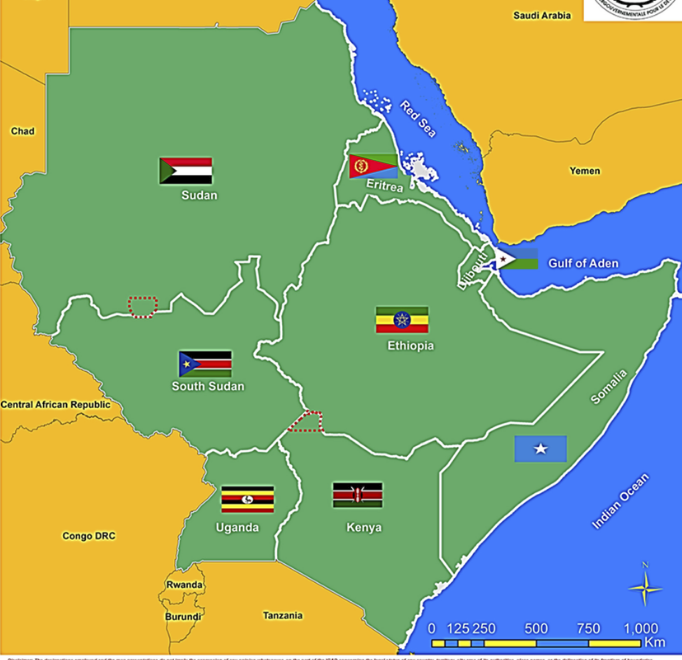
This map shows where Ethiopia is located and the countries around it, including Eritrea, Sudan, South Sudan, Kenya, Somalia, and Djibouti. The location matters because Ethiopia has accused Eritrea and Sudan of helping armed opposition groups, while both countries deny those claims.
Sudan, just west of Ethiopia, has also been at war since 2023. New fighting in Ethiopia could therefore add more instability to an already troubled region.
Where the Fighting Is Centered
The current fighting is centered in northern Ethiopia, especially:
Tigray — the northern region that was at the center of the 2020–2022 war.
Amhara — immediately south of Tigray, where Fano forces have been fighting the federal government since 2023.
Afar — east of Tigray. Fighting there is especially important because routes through Afar connect Ethiopia with Djibouti and the Red Sea trade corridor.
Important locations in the current fighting include:
Mekelle — the capital of Tigray.
Shire and Axum — major cities in Tigray, whose airports have also been affected.
Alamata — a strategically important town south of Mekelle near the Tigray-Amhara boundary.
Erebti — an Afar town near the Tigray border where fighting has also been reported.
Why the Geography Matters
The immediate fighting is concentrated in northern Ethiopia, but the political conflict is broader.
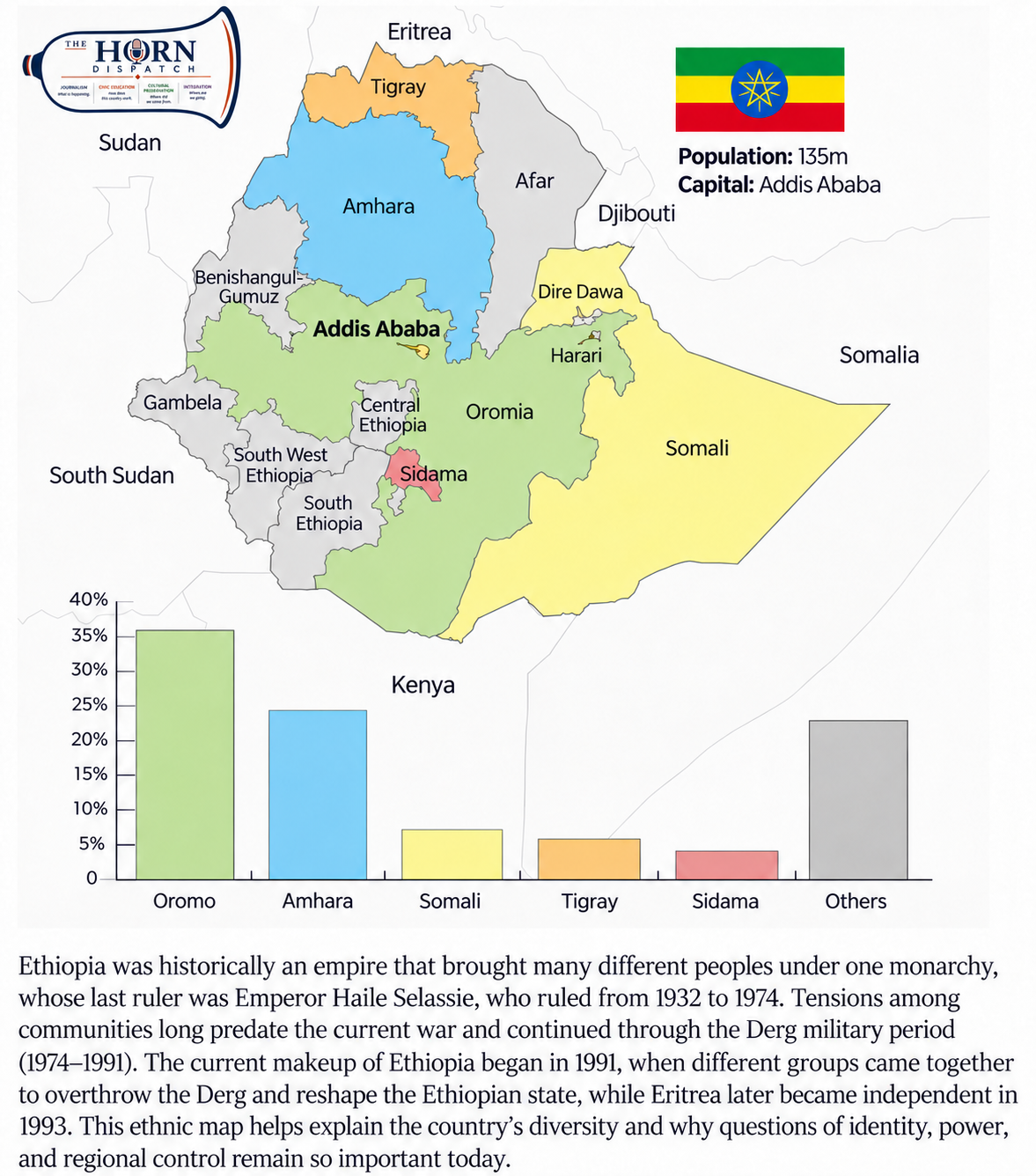
The new alliance contains armed movements associated with Tigray, Amhara, Oromia, Afar, the Somali Region and Benishangul-Gumuz.
This means the crisis should not be understood only as another dispute between Tigray and Addis Ababa.
The alliance is attempting to turn several separate conflicts with the federal government into a broader national challenge.
Whether it can actually do that remains uncertain.
Agreed-Upon Facts
How Did Ethiopia Get Here?
2020 — War Begins in Tigray
In November 2020, war broke out between Ethiopia’s federal government and the TPLF, which governed Tigray.
The TPLF had previously been the dominant political force in Ethiopia for nearly three decades. That changed after Abiy Ahmed became prime minister in 2018.
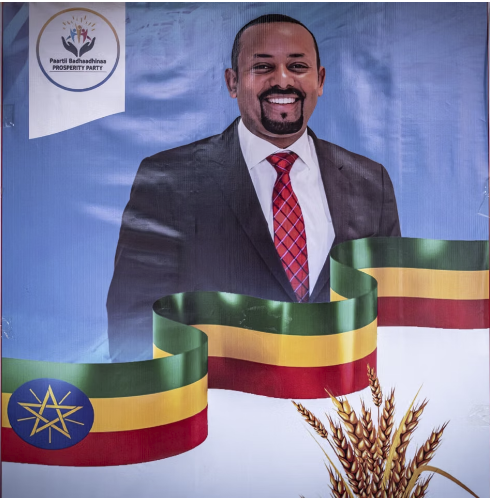
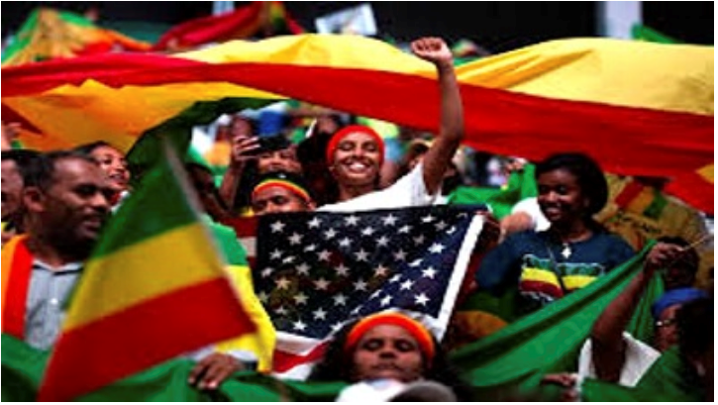
Prime Minister Abiy Ahmed: When Abiy came to power in 2018, he inspired major hope across Ethiopia and among Ethiopians abroad. His message of reform, peace and unity drew large crowds, including during a 2018 visit to Los Angeles, and for some people the excitement was like the sense of change surrounding Barack Obama’s rise in the United States in 2008.
Today, Ethiopia is far more divided, with armed opposition in Tigray, Oromia and other areas. Still, Abiy’s Prosperity Party remains dominant in national politics: in the June 2026 election, it won 438 seats—about 90% of the seats for which results were announced, although voting did not take place in Tigray and some other conflict-affected areas
Relations between Abiy’s government and the TPLF deteriorated.
On November 4, 2020, Abiy sent federal forces into Tigray after accusing TPLF forces of attacking federal military bases. The TPLF gave a different account of the events leading to the fighting.
The conflict quickly expanded.
Federal troops fought alongside Eritrean forces and forces from neighboring Amhara. Tigrayan forces fought against them.
The war became one of the deadliest conflicts in the world. Hundreds of thousands of people are estimated to have died from fighting, hunger, disease and other consequences of the war. Millions were displaced.
THE SIDES THEN
Federal Government + Eritrean Forces + Amhara Forces
VERSUS
TPLF / Tigrayan Forces
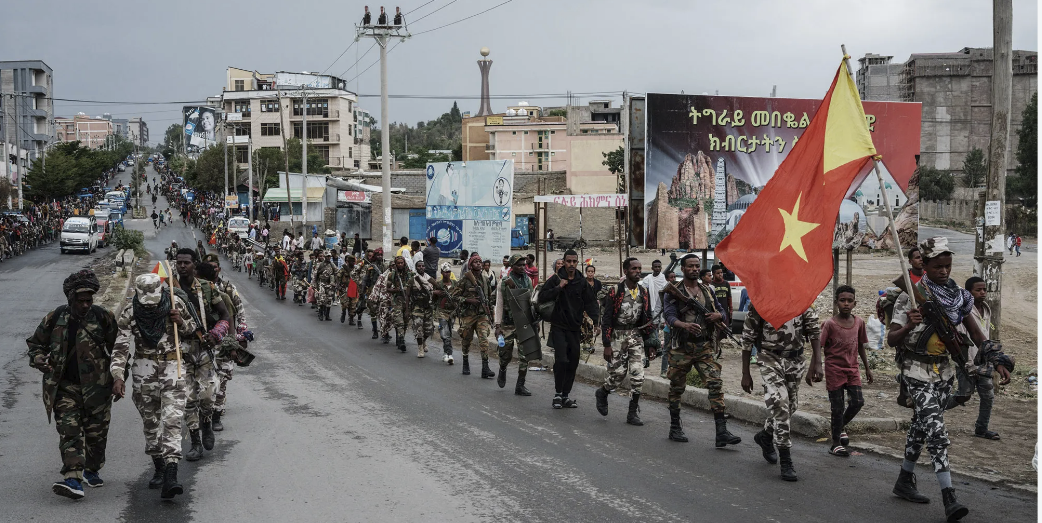
The Tigray People’s Liberation Front (TPLF): The TPLF began as an armed movement in the 1970s and played a major role in the coalition that overthrew Ethiopia’s Mengistu government in 1991. It then became the most powerful force in the coalition that governed Ethiopia for nearly three decades, until Abiy Ahmed became prime minister in 2018. After losing its dominant position in the federal government, the TPLF remained deeply rooted in Tigray and later fought the federal government in the 2020–2022 war.
Today, it is again at the center of armed opposition to Abiy’s government, although reports that its support inside Tigray is more divided than it was during the last war. The TPLF and its allies say they are fighting against federal aggression and Abiy’s rule; the federal government describes the alliance as an effort to overthrow the government.
That is important to remember.
Some of the forces that fought against each other during that war are now members of the same anti-government alliance.
2022 — The Pretoria Peace Agreement
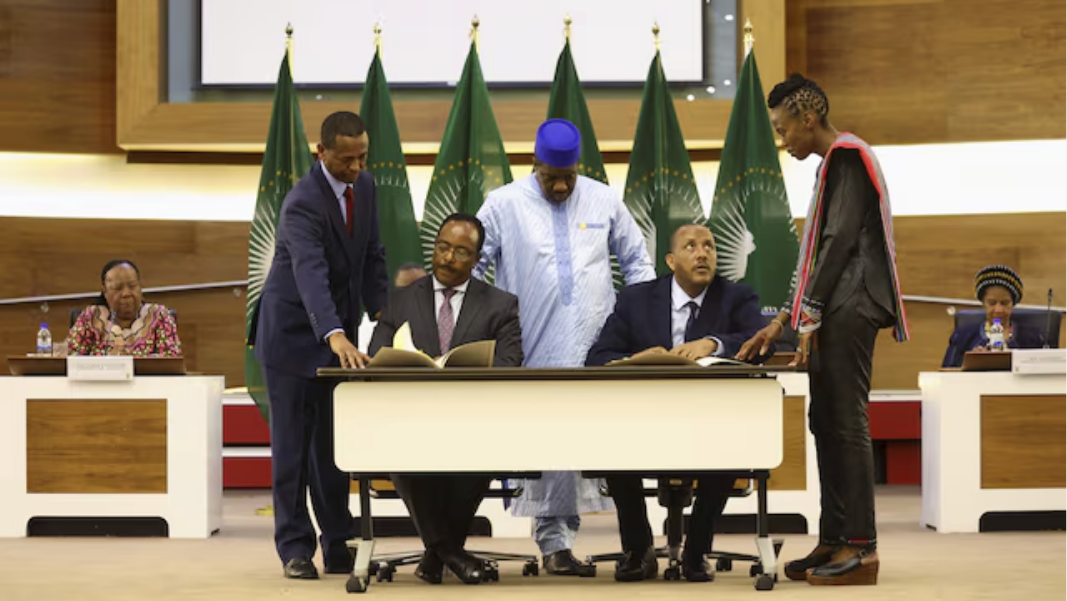
Ethiopian government representative Redwan Hussien and Tigray delegate Getachew Reda attend signing of the AU-led negotiations to resolve the conflict in northern Ethiopia, in Pretoria, South Africa, November 2, 2022.
S/Siphiwe Sibeko TPX IMAGES OF THE DAY
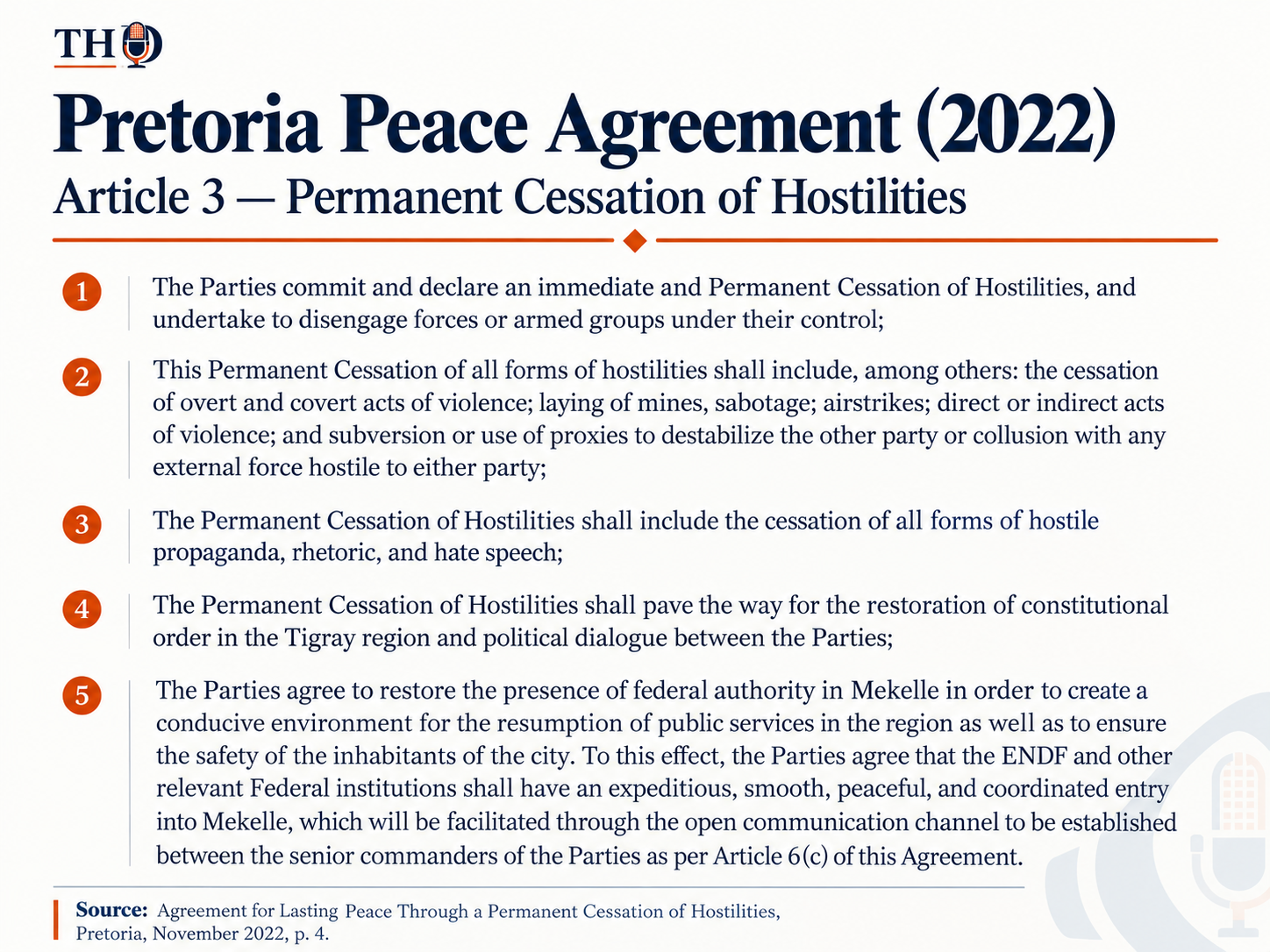
After two years of war, the Ethiopian federal government and the TPLF signed a peace agreement in Pretoria, South Africa, in November 2022.
The African Union helped negotiate the agreement.
The agreement stopped the large-scale war.
Among other things, the parties agreed to a permanent cessation of hostilities, disarmament, restoration of basic services and humanitarian access.
Make it stand out
The agreement brought an enormous reduction in fighting and allowed basic services and economic activity to return to much of Tigray.
But peace did not mean that every political problem had been solved.
Important disputes remained, including questions involving territory, displaced people, disarmament and political control.
Those unresolved issues continued after the guns largely went quiet.
2023 — Fano Turns Against the Federal Government
Amhara Fano National Movement: Fano began as a broad network of armed Amhara groups rather than one unified organization. During the 2020–2022 Tigray war, Fano fighters fought alongside Ethiopia’s federal government against the TPLF, but Fano was not a signer of the 2022 Pretoria Peace Agreement. Relations with the federal government later broke down, and Fano has fought government forces in the Amhara region since 2023.
In 2026, major Fano factions organized under the Amhara Fano National Movement, which says it is fighting to protect Amhara interests and now belongs to the broader armed alliance seeking to remove Prime Minister Abiy Ahmed’s government.
Something else important happened after the Tigray war.
Fano forces from the Amhara region had fought alongside the federal government against the TPLF during the 2020–2022 war.
But that relationship broke down.
In 2023, major fighting began between Fano fighters and the federal government in the Amhara region.
The federal government declared a state of emergency in August 2023 after fighting spread.
The conflict continued.
This created a major reversal:
Fano had gone from fighting with the federal government to fighting against it.
2025–2026 — The Tigray Peace Begins to Break Down
Problems also grew inside Tigray and between Tigrayan leaders and the federal government.
By 2025, the African Union was publicly warning about political instability inside Tigray and calling on all sides to respect the Pretoria agreement.
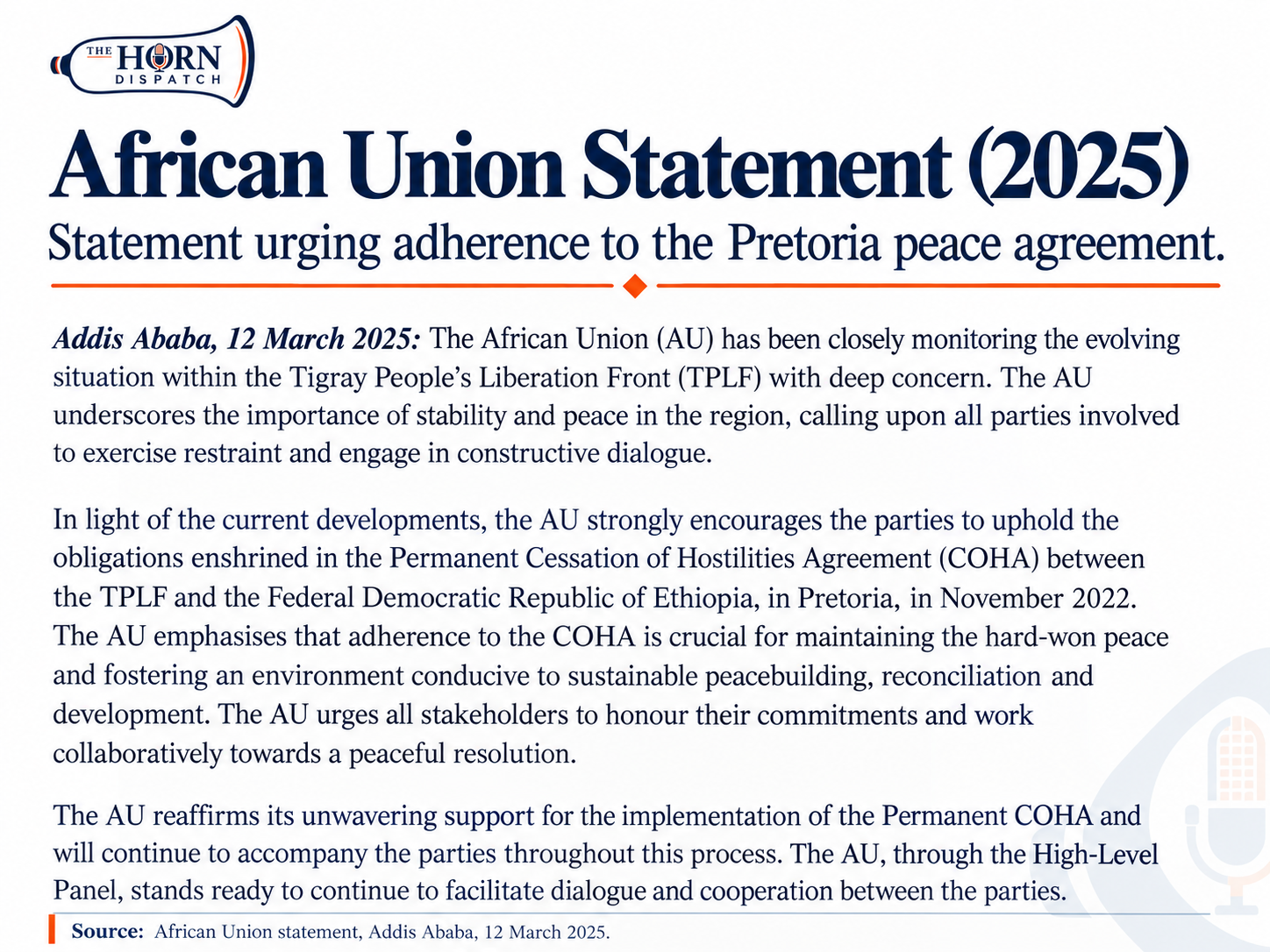
The African Union is a continent-wide organization of African countries that works on issues including peace, security and diplomacy. In Ethiopia, the AU played an important role in ending the 2020–2022 Tigray war: it organized and led the talks that produced the Pretoria Peace Agreement, with former African leaders serving as mediators. African Union The AU also helped monitor whether the agreement was being followed. African Union But its power has limits. It can mediate, monitor, issue statements and, in some situations, authorize stronger collective action, but much of its influence still depends on member governments and armed groups choosing to cooperate.
The March 2025 statement shown to the right is therefore important as a warning and diplomatic pressure, but by itself it could not force either side to follow the peace agreement.
The situation became more serious during 2026.
In January, the African Union again warned about developments in Tigray and urged the parties not to undermine the peace agreement.
In May 2026, the TPLF retook control of Tigray's regional government from the interim administration established following the peace agreement.
Relations with Addis Ababa continued to deteriorate. Drone strikes against Tigrayan forces were also reported during the following months.
The peace agreement still existed on paper.
But the political relationship behind it was breaking down.
September 2026 — Seven Armed Groups Form an Alliance
Then came the biggest political development.
On September 20, seven Ethiopian armed groups announced the creation of the:
Ethiopian Peoples’ Forces Alliance for Survival
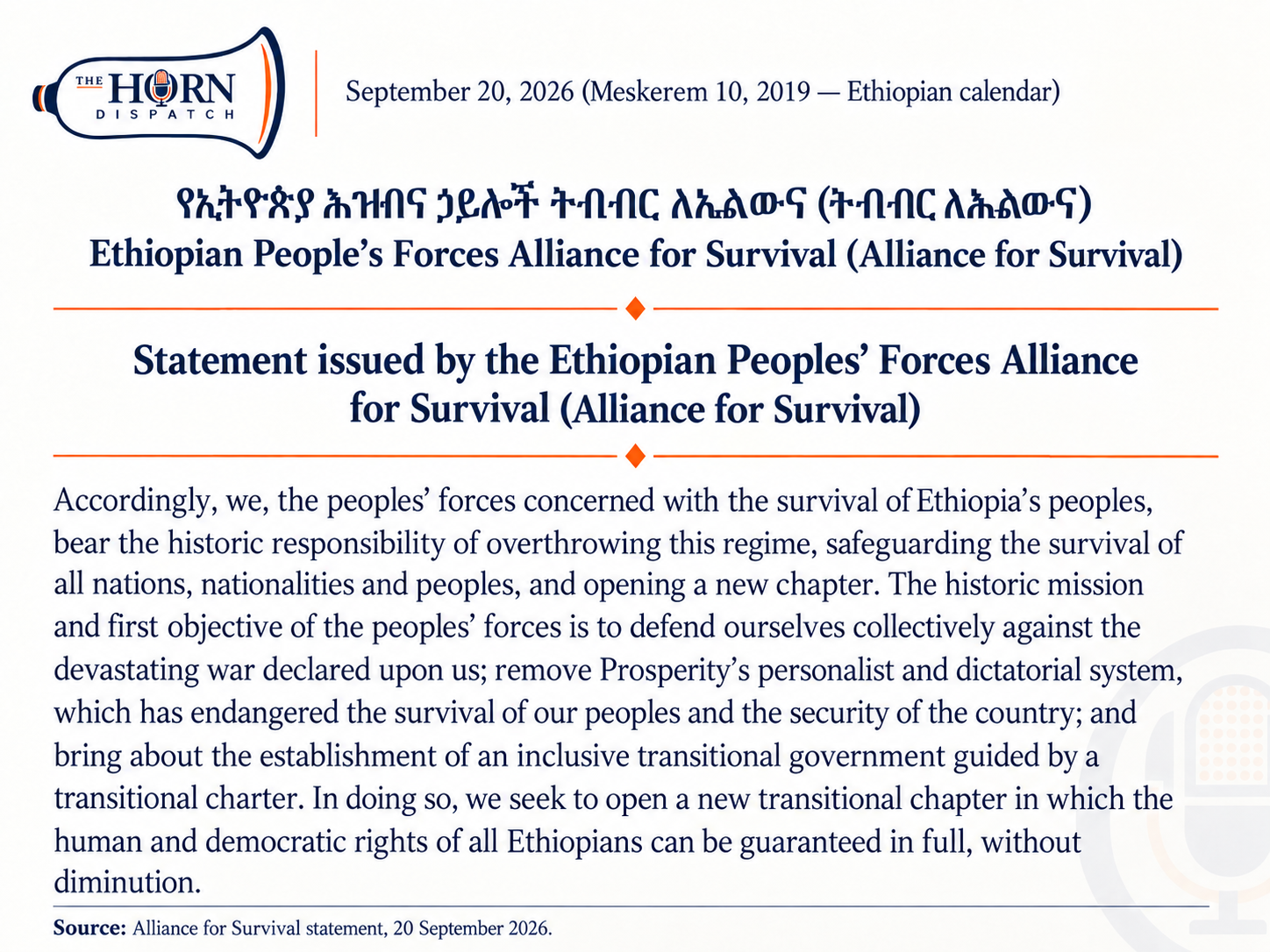
Alliance for Survival Statement: The image to the left shows an excerpt from the September 20, 2026 founding statement of the Ethiopian Peoples’ Forces Alliance for Survival, a coalition of seven armed and political groups opposed to Prime Minister Abiy Ahmed’s government.
The language is unusually direct: the alliance openly says its goal is to remove the Prosperity Party government and replace it with a transitional government. The alliance is especially significant because it brings together former enemies, including the TPLF and Amhara Fano, which fought on opposite sides during the 2020–2022 war, along with the Oromo Liberation Army and several smaller regional groups.
The alliance includes:
1. Tigray People’s Liberation Front (TPLF)
2. Amhara Fano National Movement
3. Oromo Liberation Army (OLA)
4. Ogaden National Liberation Front (ONLF)
5. Afar Revolutionary Democratic Unity Front
6. Benishangul People’s Liberation Movement
7. Gumuz People’s Democratic Movement
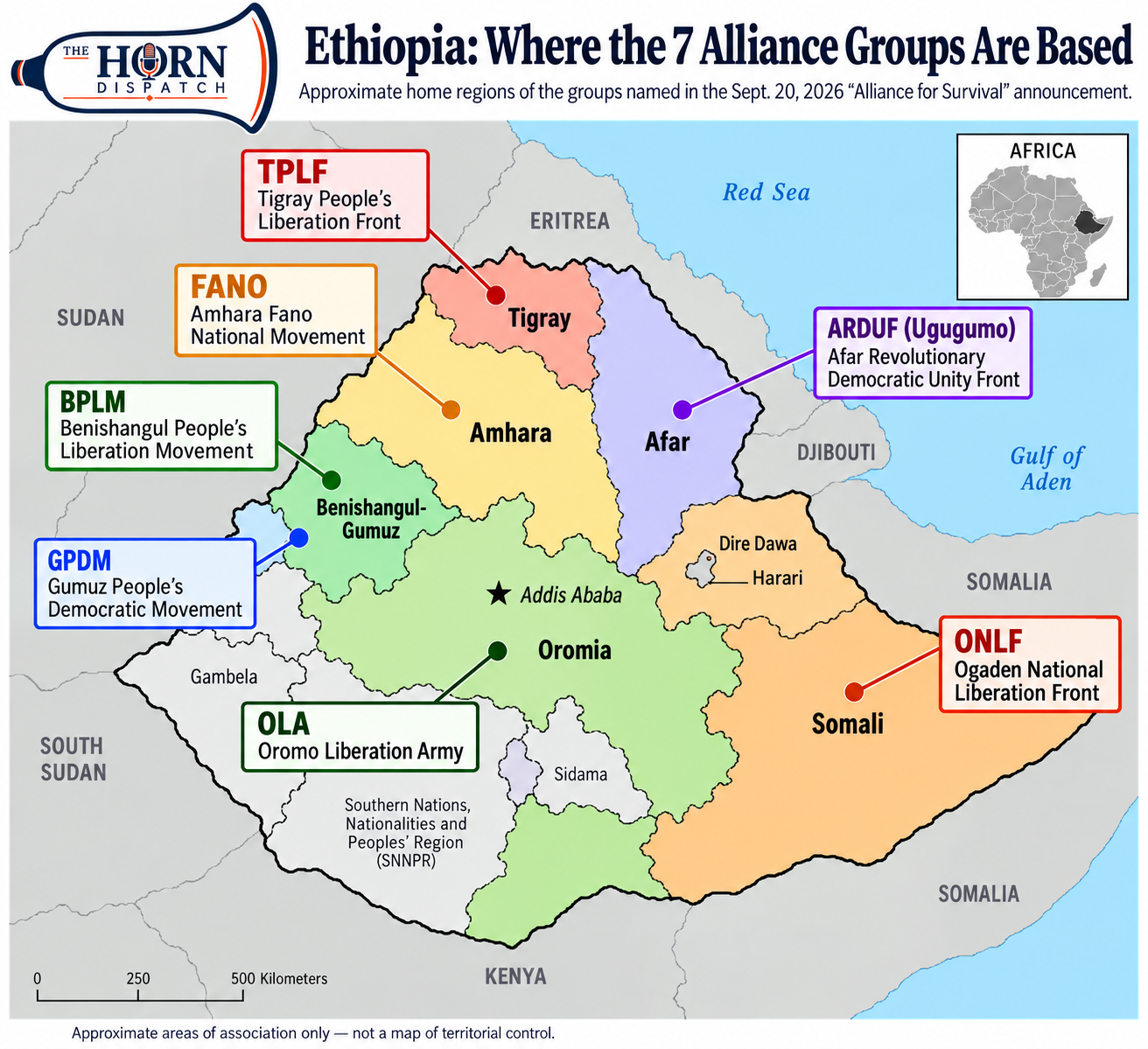
Where the Alliance Groups Are Based: This map shows the regions of Ethiopia most closely associated with the seven groups in the new Alliance for Survival. It does not mean that everyone in those regions supports the groups or that the groups control the entire areas shown.
The organizations also differ greatly in size, manpower, resources and military experience. The TPLF, Fano and OLA have the strongest recent histories of sustained armed conflict, while some of the smaller groups have more limited reach. Just as important, several alliance members have fought each other in the past, so whether they can operate effectively as one coalition remains uncertain.
The alliance says it wants to remove Prime Minister Abiy Ahmed’s government and establish a transitional government.
Several members accuse the federal government of concentrating too much power in Addis Ababa and weakening Ethiopia's regional system.
The federal government disputes that characterization and says it has pursued national dialogue to address Ethiopia's political divisions.
But perhaps the most surprising part of the alliance is who is standing together.
TPLF and Fano fought one another during the Tigray war.
They also continue to have serious disagreements over territory.
Now they share one immediate political objective:
opposition to the federal government.
That does not necessarily mean they have resolved their differences.
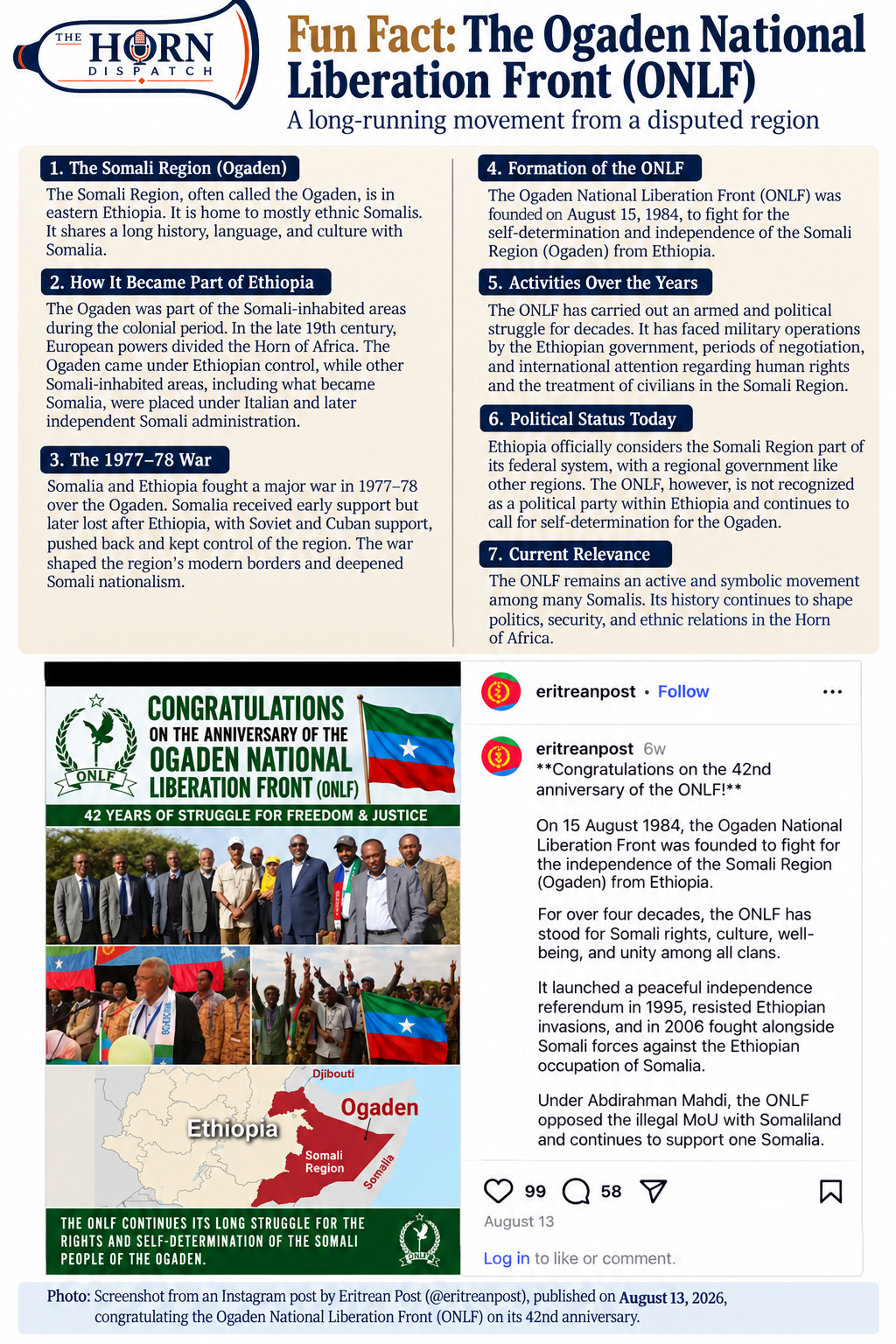
Photo Description: From posted on Instagram, “eritreanpost”, on August 13, 2026. Link: https://www.instagram.com/reel/Db_SEUKoiOq/
September 23, 2026 — Major Fighting Returns
Only days after the alliance was announced, the crisis moved from political organization to major military confrontation.
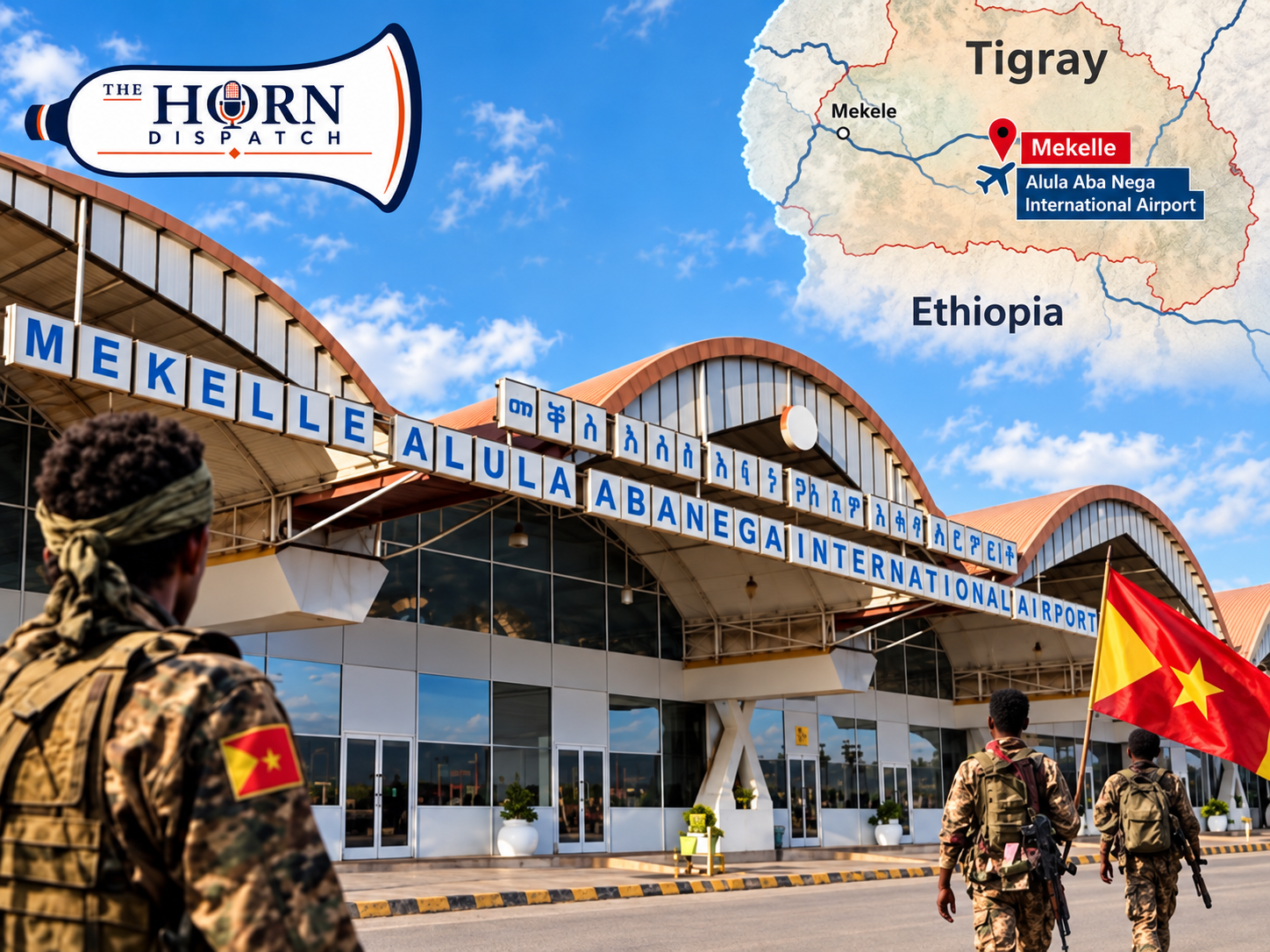
Mekelle’s Alula Aba Nega International Airport: Mekelle is the capital of Ethiopia’s northern Tigray region, and its airport is the region’s main air link to Addis Ababa and the rest of the country. It is not comparable in size or international importance to Addis Ababa’s Bole International Airport, but it is strategically important for Tigray. On September 23, 2026, Tigrayan forces took control of the airport from federal police, and Ethiopian Airlines suspended flights to Mekelle, Axum and Shire. The takeover of a regional capital’s main airport—and the loss of normal air service—is a clear sign of how serious the renewed conflict has become.
Update: On Sunday October 04, 2026 Ethiopian federal and allied forces have taken control of Mekelle, the capital of Tigray, after TPLF forces withdrew from the city. The TPLF has described the move as a temporary withdrawal intended in part to protect Mekelle from further destruction, rather than a surrender. The capture of the regional capital represents a major reversal: less than two weeks earlier, Tigrayan forces had seized airports in Mekelle, Axum and Shire as fighting rapidly expanded across northern Ethiopia.
Tigrayan forces seized the airport in Mekelle from federal police.
Ethiopian Airlines then suspended flights to Mekelle, Shire and Axum.
The African Union subsequently said Tigrayan forces had seized and occupied the three airports and detained federal personnel.
Tigray's regional government announced that its forces had entered what it called a defensive war against federal forces.
Federal officials, however, described the events differently and said Tigrayan forces had launched a major offensive.
Those competing descriptions of who initiated the current round of fighting remain disputed.
What is not disputed is that major fighting has returned.
Combat has been reported in Tigray, Amhara and Afar.
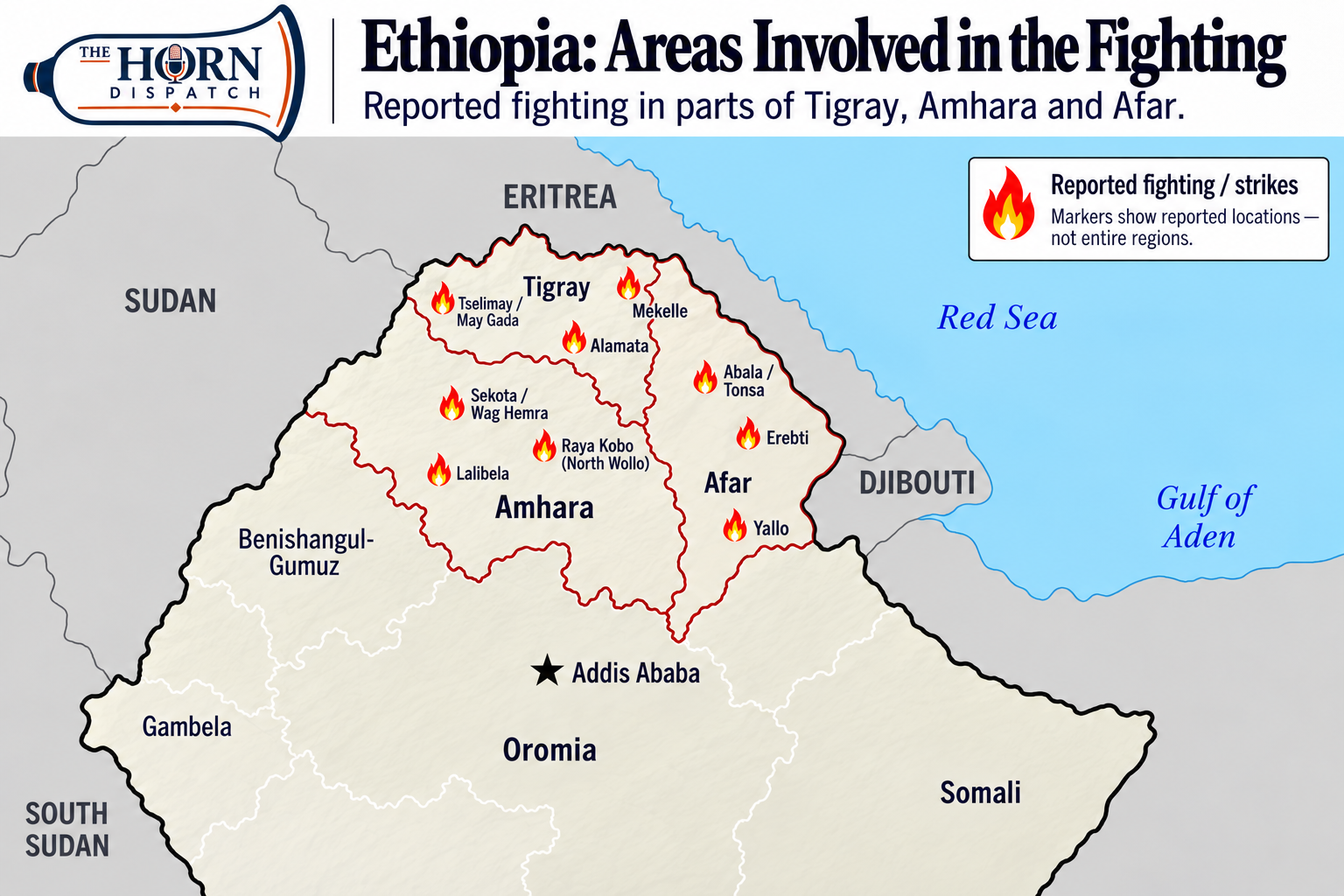
Map of the Fighting in Northern Ethiopia: The map above shows locations in Tigray, Amhara, and Afar where fighting, airstrikes, or other military activity has been reported during the developing conflict. The flame symbols identify reported conflict locations and are intended to show the general geographic spread of the fighting—not current control of territory or every active front line. Because the conflict is developing quickly and some areas have limited communications, battlefield conditions may change and individual reports may be difficult to independently verify.
September 28, 2026 — The Battlefield Is Already Moving
The situation continues to change.
On September 28, pro-government forces said they had captured Alamata, a strategically important town approximately 120 kilometers south of Mekelle.
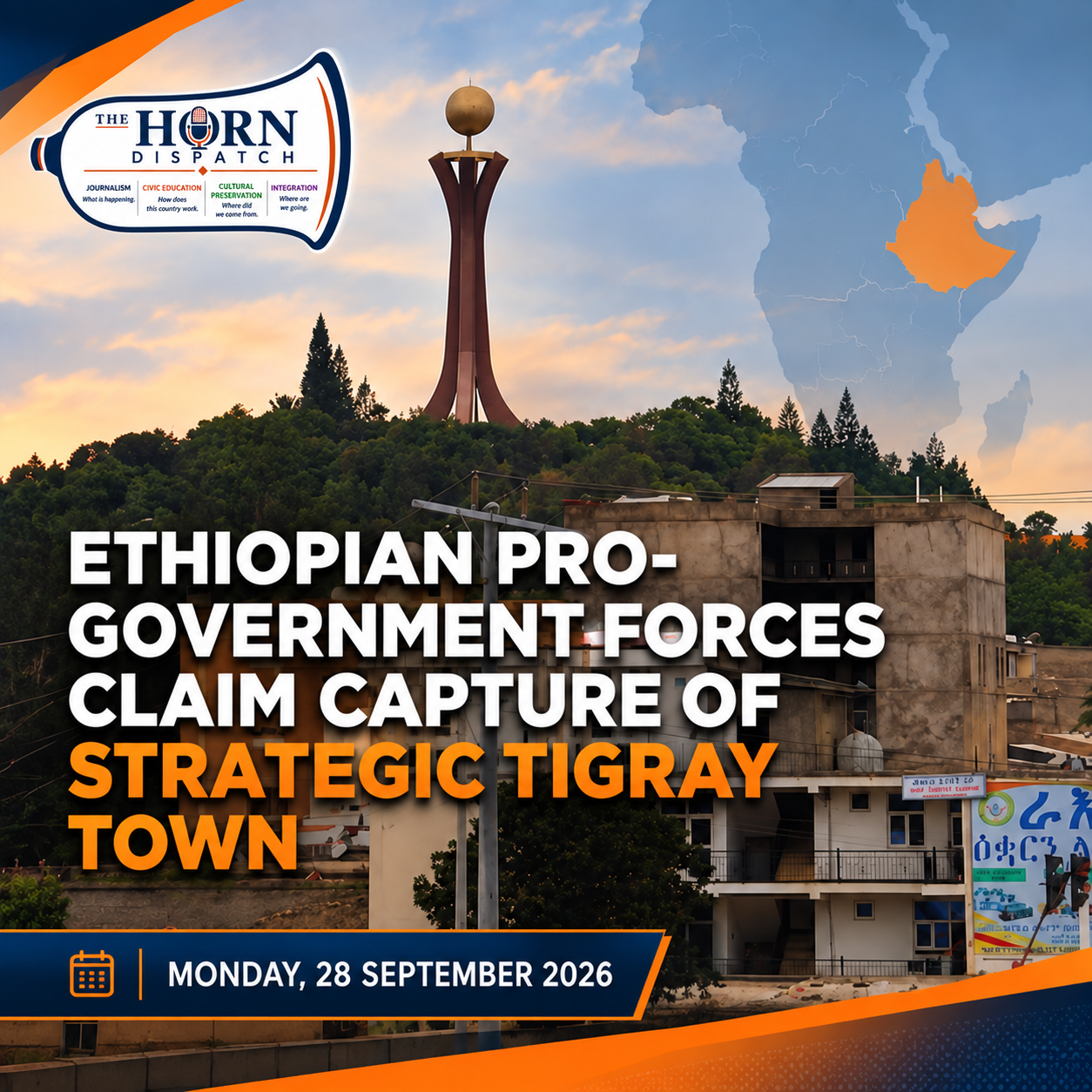
On September 28, Ethiopian federal forces and their allies captured Alamata, a strategic town about 120 kilometers south of Mekelle. The capture became the beginning of a rapid federal advance north through Tigray.
By October 4, federal and allied forces had reached Mekelle, where TPLF forces withdrew and government forces took control of the regional capital.
Two diplomatic sources also told Reuters that Alamata had fallen. Another said pro-government forces had entered the town but that it was not yet clear whether they had complete control.
Alamata changed hands several times during the previous Tigray war.
Fighting has also expanded into Afar.
Reports indicate that Tigrayan forces entered Erebti, while a humanitarian source estimated that fighting had displaced at least 150,000 people in Afar. Exact displacement numbers remain difficult to confirm.
The speed of these developments shows why battlefield claims should be treated carefully.
A town reported under one side's control today may change hands again.
Developing Questions
Several major questions remain unanswered.
Is This the Beginning of Another Ethiopian Civil War?
Large-scale fighting has clearly returned.
But it is still too early to know whether the current conflict will grow to the scale of the 2020–2022 war.
Tigrayan leaders say they are again at war with the federal government. Fighting is occurring across several regions.
At the same time, the new anti-government alliance has not yet demonstrated that its seven members can operate as one coordinated national military force.
The groups are geographically separated and have different political goals.
Some have fought one another before.
So the existence of an alliance should not automatically be understood to mean that Ethiopia now faces one unified rebel army.
Can Former Enemies Really Stay Together?
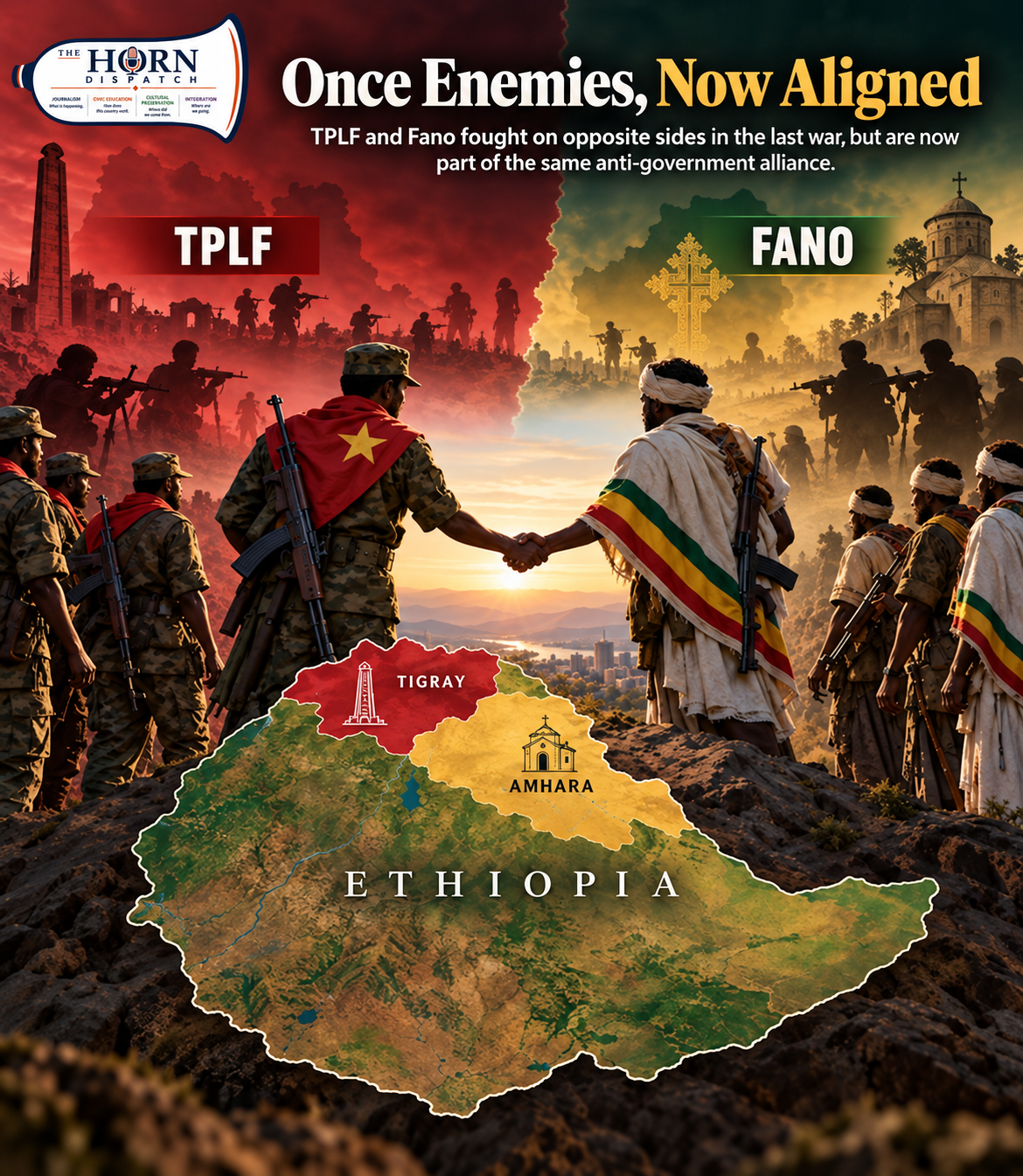
Former Enemies, Now Allies: The TPLF and Amhara Fano are two of the most important armed groups in the new opposition alliance. That partnership is notable because they fought on opposite sides during the 2020–2022 war, when Fano supported the federal government against the TPLF. Both have significant combat experience and stronger organization than several of the alliance’s smaller members.
Their cooperation could therefore create a more serious challenge for federal forces, especially if outside support alleged by the Ethiopian government were ever proven. Ethiopia has accused Eritrea, Sudan and Egypt of assisting the opposition; those countries have denied the allegations. How effectively the TPLF and Fano can actually work together remains uncertain because they still have major political and territorial disagreements.
This may be one of the biggest questions.
TPLF and Fano fought on opposite sides of the last war.
They still have serious disagreements, including disputes involving territory between Tigray and Amhara.
The OLA also has its own history, political objectives and disputes.
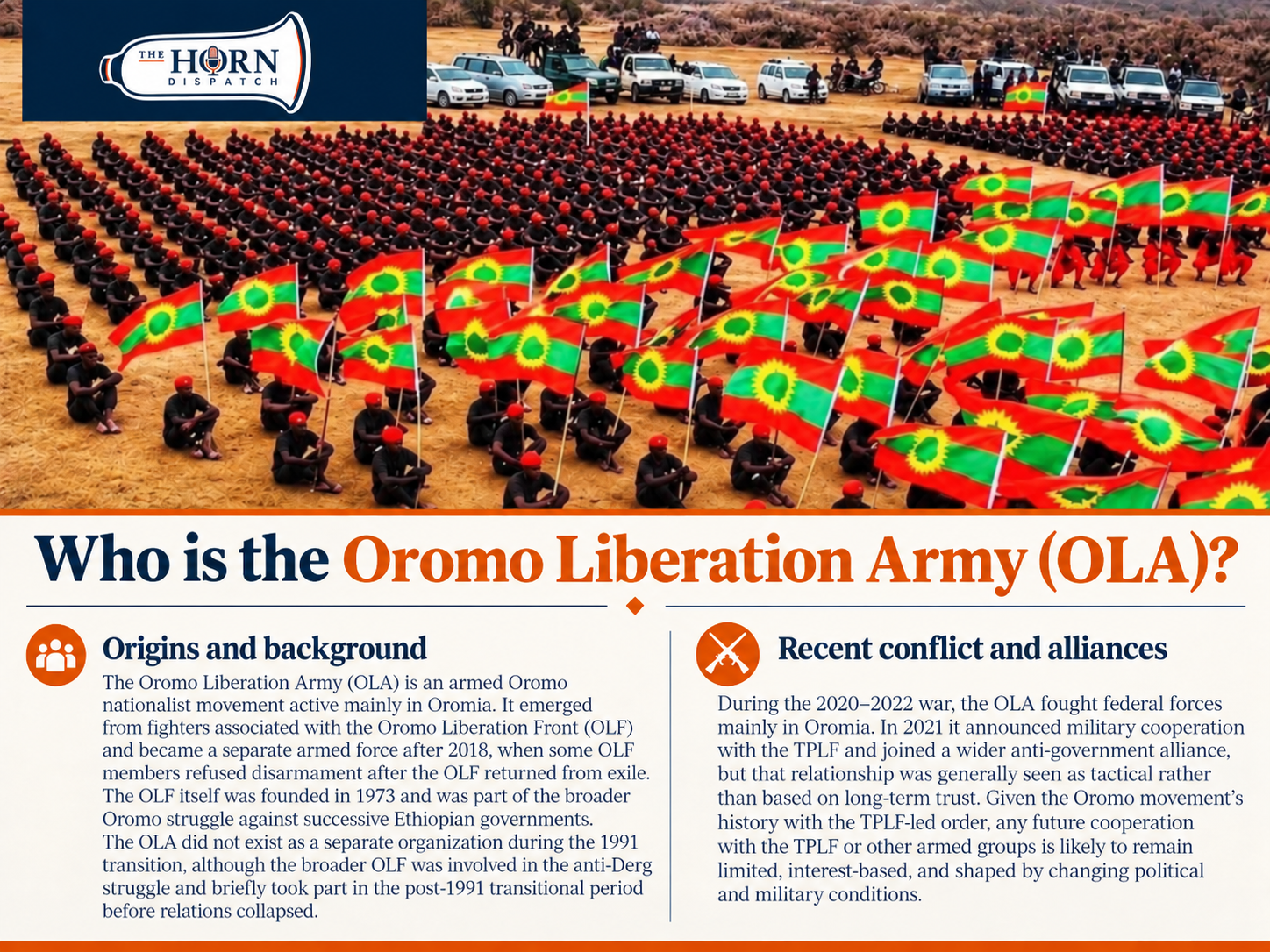
For now, opposition to Abiy Ahmed's federal government has brought these organizations together.
Whether that is enough to keep them together over time is unknown.
Will Eritrea Become Involved?
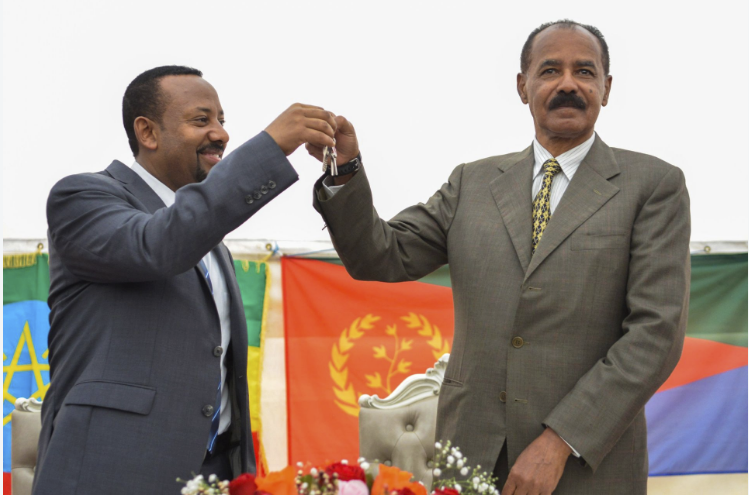
From allies to adversaries: Ethiopian Prime Minister Abiy Ahmed and Eritrean President Isaias Afwerki celebrate the reopening of Eritrea’s embassy in Addis Ababa in July 2018, during a historic thaw between the two countries.
Eight years later, their relationship has sharply deteriorated, raising fears that renewed fighting in northern Ethiopia could draw Eritrea into the conflict. (Michael Tewelde/AFP via Getty Images)
This may be the most dangerous unanswered question.
Eritrea fought alongside Ethiopia's federal government against the TPLF during the previous Tigray war.
Relations between Addis Ababa and Asmara have since deteriorated.
The Ethiopian government now accuses Eritrea of financially supporting the new anti-government alliance.
Eritrea has denied similar allegations.
Those accusations should not be reported as established fact without independent evidence.
But direct involvement by Eritrea—or another neighboring country—could greatly expand the conflict.
For now, that remains a developing issue.
Details are changing quickly and may change after publication.
HOW THIS IS BEING COVERED
Because this is an Ethiopian conflict rather than a U.S. partisan issue, the usual Democratic/Republican division in the THD template is not especially useful here.
A better distinction is between the main competing Ethiopian narratives and independent reporting.
Federal Government Framing
Getachew Reda, an adviser to Abiy and a former TPLF official, wrote on X that the TPLF had seized control of federally controlled airports in Tigray and launched an “all-out offensive” against government positions in the neighboring regions of Afar and Amhara.
“The TPLF politico-military leadership has obviously taken irresponsibility to new heights,” he said. Getachew later dismissed the alliance’s prospects of overthrowing the government, telling state media, “I don’t lose sleep over that.” Al Jazeera
Federal officials portray the armed movements as groups attempting to destabilize or overthrow Ethiopia’s constitutional government. Since the fighting began, the government has expanded its accusations of foreign involvement. Ethiopia’s military chief, Field Marshal Birhanu Jula, has accused Eritrea, Sudan and Egypt of supporting the TPLF and its allies. Eritrea, Sudan and Egypt have denied supporting the opposition. AP News
In the 2020–2022 Tigray war, Ethiopia’s neighbor and historical adversary Eritrea backed the federal government militarily against the TPLF. Relations between the two governments have since deteriorated sharply. Abiy’s spokesperson, Billene Seyoum, initially told Reuters that members of the newly announced alliance had already been collaborating with Eritrea’s financial backing, saying the alliance announcement confirmed what the Ethiopian government had been alleging. Internazionale
The dispute has since escalated beyond accusations. Eritrea severed diplomatic relations with Ethiopia on October 1, after Ethiopia closed its embassy in Asmara and expelled Eritrean diplomats. Eritrea continues to deny supporting Ethiopian armed groups. Reuters
Meanwhile, federal and allied forces launched a rapid counteroffensive in Tigray and, by October 4, regained control of Mekelle, after the TPLF withdrew from the regional capital. The federal government continues to dispute claims that its policies unfairly centralize political power.
TPLF / Opposition Alliance Framing
TPLF leaders describe the renewed fighting as defensive. Tigray’s leaders said in a statement they had entered a “defensive” war to counter aggression by the federal government.
Members of the new alliance accuse Abiy Ahmed's government of centralizing political power and marginalizing Ethiopia's regions.
The alliance says its objective is to replace the current government with a transitional government and begin a new national political process.
These are the alliance's stated positions, not independently established conclusions about the federal government.
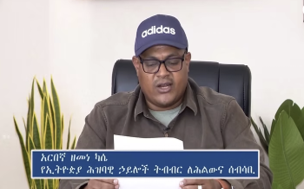
Zemene Kassie and the Alliance for Survival: The man shown above is Zemene Kassie, chairman of the Amhara Fano National Movement (AFNM). On September 20, 2026, he read the joint statement announcing the formation of the Ethiopian Peoples’ Forces Alliance for Survival, also called the Alliance for Survival, on Tigrai TV. The announcement brought together seven armed and opposition groups, including Fano, the TPLF and the Oromo Liberation Army, around a stated goal of removing the Prosperity Party government and creating a transitional government.
The fact that the statement was read publicly by the chairman of one of the alliance’s major armed groups made the coalition’s formation a formal and open challenge to the federal government, rather than just private coordination among these groups.
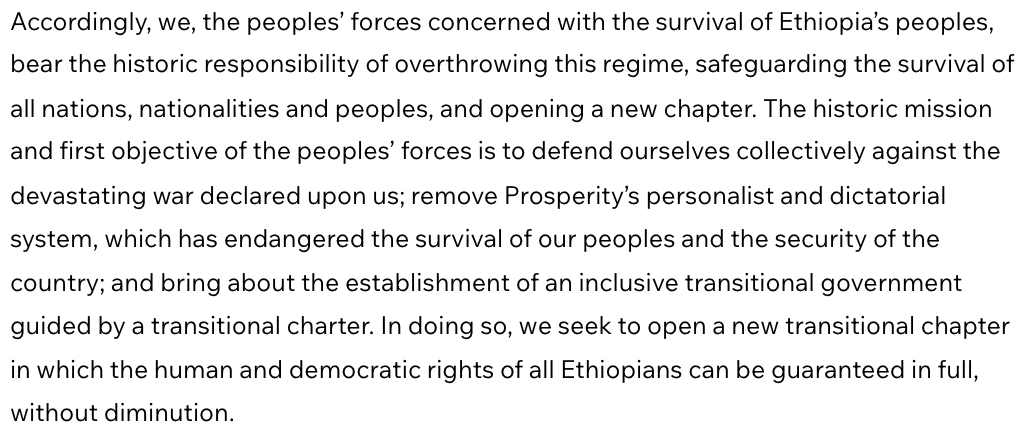
Excerpt
Statement issued by the Ethiopian Peoples’ Forces Alliance for Survival (Alliance for Survival)
Independent / Non-Aligned Coverage
Independent reporting has focused heavily on three facts:
First: major fighting has returned to northern Ethiopia.
Second: the new alliance is unusual because it contains former enemies.
Third: it remains unclear whether those groups can remain united or coordinate effectively.
The African Union has taken a clear institutional position on the peace process: it says the Pretoria Agreement remains the framework for resolving the conflict and has called for immediate de-escalation and dialogue.
TAKEAWAY FOR THE EAST AFRICAN / HORN OF AFRICA DIASPORA
For Ethiopians and other East Africans living abroad, the most important thing right now is to understand what has changed—and what has not yet been established.
What has changed?
Fighting has returned to northern Ethiopia.
The political map has also changed dramatically.
During the last war:
Federal Government + Eritrea + Amhara Forces (FANO)
fought
TPLF / Tigrayan Forces
Today:
TPLF + Fano + OLA + four other armed movements
have formed an alliance against
the Federal Government.
Meanwhile, Ethiopia's relationship with Eritrea has deteriorated sharply.
That is a major political reversal.
What has not been established?
It has not been established that the seven armed groups can function as one military force.
It has not been established that their old political and territorial disputes have been resolved.
It has not been independently established that Eritrea or other neighboring governments are directly supporting the alliance.
And it is still too early to know whether this fighting will become another war on the scale of 2020–2022.
What should diaspora communities watch?
Watch the facts—not social-media rumors.
Pay particular attention to:
Mekelle and southern Tigray — whether federal forces move farther toward the regional capital.
Afar — whether fighting moves deeper toward Ethiopia's main transportation corridor to Djibouti.
Amhara — whether Fano and Tigrayan forces actually coordinate militarily.
Eritrea — whether credible evidence emerges of direct involvement.
Pretoria — whether the African Union can bring the federal government and Tigrayan leadership back to negotiations.
The biggest lesson right now is not that another nationwide war is inevitable.
It is that the political arrangements that ended Ethiopia's last major war are under their greatest pressure since the Pretoria agreement was signed.
The next several weeks may show whether Ethiopia returns to negotiation—or moves deeper into another major conflict.
What does this mean for Ethiopian families right now?
For Ethiopian families in the diaspora, the situation is serious—but it is still developing.
For those with family in Tigray, northern Amhara, or Afar, the concern is more immediate. Fighting is already taking place in these areas, transportation has been disrupted, and communications have become more difficult in some places.
For those with family in Addis Ababa, Oromia, the south, and other parts of Ethiopia, the situation is different. The renewed fighting is currently concentrated in northern Ethiopia. That does not mean other parts of the country will remain unaffected. Ethiopia is one country, and a major conflict in one region can eventually affect transportation, prices, travel, government services, the economy, and security elsewhere.
But it is important not to get ahead of the facts. It is still too early to know how far this conflict will spread.
For now, diaspora families can do a few simple things:
Stay in regular contact with family in Ethiopia, especially relatives living near areas where fighting is occurring.
Do not panic if communication becomes difficult. Internet and telephone disruptions can make it harder to reach people in affected areas.
Follow reliable reporting rather than relying on WhatsApp messages, TikTok videos, Facebook posts, or claims from supporters of either side.
Check on relatives before making travel plans to affected areas and continue watching developments.
Remember that Ethiopia is a large country. Fighting in one region does not automatically mean that every part of Ethiopia is experiencing the same conditions.
For Ethiopians living abroad, events like these can feel close even when we are thousands of miles away. Many of us still have parents, siblings, relatives, friends, property, businesses, and communities in Ethiopia.
There is reason to pay attention. There is not yet reason to assume the worst.
Stay informed. Stay connected to family. Separate confirmed information from rumor. And continue watching where the fighting goes from here.